
Choosing the right bottom paint is one of the most important decisions for protecting your boat’s hull, maintaining performance, and reducing long-term maintenance. For many boat owners, copper-based antifouling paints have long been the standard choice. But growing interest in lower-impact coatings has led more boaters to consider copper-free bottom paint as an alternative.
So, is copper-free bottom paint right for your boat?
Protection, Maintenance, and Environmental Tradeoffs
The answer depends on where you boat, how often the vessel is used, the type of fouling you deal with, and what matters most to you—whether that is strong antifouling protection, easier maintenance, or reducing environmental impact. Understanding the benefits and tradeoffs of copper-free bottom paint can help you make a more informed decision.
What Is Copper-Free Bottom Paint?
Copper-free bottom paint is antifouling paint that does not rely on copper as its primary active ingredient to prevent marine growth. Instead, these coatings use alternative biocides or other antifouling technologies designed to help control slime, algae, barnacles, and other fouling organisms.
Copper-free paints have become increasingly popular with boat owners who are looking for alternatives to traditional copper-based coatings. In some cases, they are chosen because of local environmental concerns, marina restrictions, compatibility with certain hull materials, or a desire to explore newer antifouling technologies.
Why Boat Owners Consider Copper-Free Bottom Paint
Many boat owners begin looking into copper-free coatings because they want bottom paint that provides reliable protection while reducing some of the concerns associated with traditional copper formulas.
Common reasons include:
- Interest in lower-copper or copper-free alternatives
- Concern about environmental impact in marinas and coastal waterways
- Hull compatibility, especially for aluminum boats where copper-based paints are generally not appropriate
- Curiosity about newer antifouling technologies
- Desire to compare maintenance needs, repainting cycles, and overall performance
For some boaters, copper-free paints are also appealing because they represent a more modern approach to antifouling protection.
How Copper-Free Bottom Paint Protects Your Hull
Like traditional antifouling paints, copper-free bottom paints are designed to help prevent marine organisms from attaching to the hull. Fouling can increase drag, reduce fuel efficiency, lower performance, and make the boat more difficult to clean and maintain.
The way copper-free paint works depends on the product. Some use alternative biocides that are released in a controlled way over time. Others may use self-polishing technology that gradually wears away, exposing fresh active ingredients and helping reduce paint buildup.
This is an important point for boat owners comparing options. Not all copper-free bottom paints perform the same way, and not all of them offer the same maintenance profile. Product type, water conditions, fouling pressure, and usage patterns all affect results.
Protection in Harsh Marine Environments
One concern some boat owners have is whether copper-free bottom paint can stand up to aggressive fouling conditions. In many cases, the answer is yes—provided the right product is chosen for the application.
For example, Biocop TF Self-Polishing Bottom Paint was developed as an alternative to tin-based antifouling paints to protect against the harshest marine environments. It uses newer biocide technology and a self-polishing system designed to provide controlled biocide release over time. Its revolutionary polymer binder system produces an engineered biocide release intended to deliver antifouling performance while leaving no harmful effects on the environment.
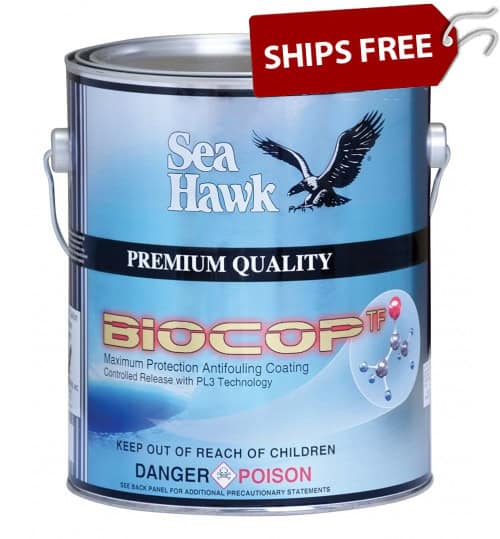
Biocop TF was developed as an alternative to tin-based antifouling paints to protect against the harshest marine environments.
That makes products like Biocop TF especially relevant for boat owners who want strong antifouling performance but are also exploring alternatives to older, more environmentally concerning coatings.
Copper-Free vs. Traditional Copper Bottom Paint
Copper-free bottom paint is not automatically better for every boat, but it can be a very good choice in the right circumstances.
Traditional copper paints are often selected for their long track record and wide availability. They remain popular because many boat owners know how they perform in specific waters and conditions.
Copper-free paints, on the other hand, may appeal to boaters who want:
- An alternative to copper-based coatings
- A product aligned with local environmental preferences or restrictions
- Compatibility with aluminum hulls or outdrives when approved for those applications
- Access to newer antifouling technologies and binder systems
The tradeoff is that copper-free performance can be more product-specific. Boat owners may need to pay closer attention to the manufacturer’s recommendations for water type, fouling conditions, and vessel usage.
Maintenance and Yearly Sanding Considerations
A common question is whether copper-free bottom paint means less sanding and less maintenance.
Sometimes—but not always.
That depends more on the type of coating than on the simple fact that it is copper-free. For example, self-polishing bottom paints are designed to wear away gradually during use. This can help reduce heavy paint buildup over time compared to some harder coatings, which may eventually require more aggressive surface prep.
So while some copper-free paints may support a cleaner maintenance cycle, it is best not to assume that every copper-free paint automatically means less yearly sanding. The more accurate takeaway is this:
- Some copper-free paints, especially self-polishing formulas, may help reduce buildup over time
- Maintenance needs still depend on the product, the boat’s usage, and the fouling conditions
- Annual inspection and maintenance are still important no matter which antifouling system you choose
For boat owners trying to reduce long-term prep work, a self-polishing copper-free option may be worth considering.
Environmental Tradeoffs
One of the biggest reasons boaters look at copper-free bottom paint is environmental impact. Copper-free coatings are often viewed as a lower-impact alternative to traditional copper-based antifouling paints, especially in areas where copper loading in marinas and waterways is a concern.
That said, it is important to look at environmental tradeoffs carefully. “Copper-free” does not mean the product has no active ingredients or no environmental considerations at all. It simply means the paint relies on antifouling technologies other than copper.
A more balanced way to think about it is this: copper-free paints may help reduce dependence on copper while still delivering antifouling protection, but boat owners should still review the product details, label instructions, and intended use.
Is Copper-Free Bottom Paint Right for Your Boat?
Copper-free bottom paint may be a good fit if:
- You want an alternative to traditional copper-based antifouling paints
- You boat in an area where environmental considerations are especially important
- You own an aluminum boat or metal components that require copper-free compatibility
- You are interested in newer antifouling technologies
- You want to compare self-polishing options that may help manage paint buildup over time
It may be less ideal if:
- You already have a copper-based system that performs well in your waters and you do not want to change
- You are selecting paint based only on the assumption that all copper-free products require less maintenance
- You have not checked compatibility with your hull, current coating, or operating conditions
Final Thoughts
Copper-free bottom paint can be an excellent choice for many boat owners, especially those looking for effective hull protection with a different environmental profile than traditional copper coatings. The key is choosing the right product for your boat, your location, and the type of fouling pressure you face.
Products such as Biocop TF Self-Polishing Bottom Paint show how modern copper-free antifouling technology has evolved. Developed as an alternative to older tin-based antifouling paints, it is designed for harsh marine environments and uses controlled biocide release technology in a self-polishing formula.
If you are trying to decide whether copper-free bottom paint is right for your boat, the best approach is to compare your hull type, water conditions, maintenance preferences, and antifouling goals. With the right match, copper-free bottom paint can offer a strong balance of protection, maintenance performance, and environmental consideration. If you would like to discuss your boat painting project with our technical customer service team you can give them a call at 888-505-2313 and they will be happy to help answer any questions.