Tag Archives: aluminum boat paint

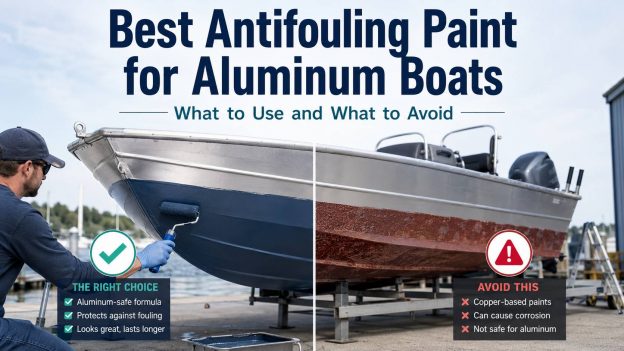
Best Antifouling Paint for Aluminum Boats: Aluminum-Safe Bottom Paint Guide

Quick Answer: What Is the Best Antifouling Paint for Aluminum Boats?

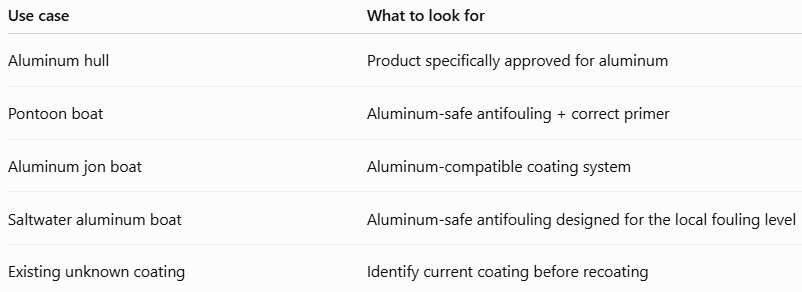
The best antifouling paint for aluminum boats is a bottom paint specifically labeled safe for aluminum. Many traditional copper-based antifouling paints should not be used on aluminum hulls because they can cause galvanic corrosion. For aluminum boats, choose an aluminum-safe antifouling paint and use the correct primer system recommended by the manufacturer.

Why Aluminum Boats Need Special Bottom Paint

Aluminum reacts differently than fiberglass or wood, so coating compatibility is critical. The wrong bottom paint can lead to corrosion, adhesion failure, or damage to the hull. Always verify that the antifouling paint is approved for aluminum before applying it below the waterline.

Best Bottom Paint Choice by Aluminum Boat Use

Boat Use Recommended Paint Type Why
Aluminum boat kept in saltwater Aluminum-safe antifouling bottom paint Helps reduce marine growth while avoiding coatings that may damage aluminum.
Aluminum boat kept in freshwater Freshwater-compatible aluminum-safe bottom paint Provides fouling protection suited to freshwater conditions.
Trailered aluminum boat Durable marine paint or trailerable aluminum-safe bottom paint Must tolerate launching, loading, bunk contact, and abrasion.
Aluminum jon boat Aluminum primer and marine topcoat or aluminum-safe bottom paint if kept in water The right system depends on whether the boat is stored dry or left in the water.
Previously painted aluminum hull Compatible primer and antifouling system Existing paint must be identified before recoating.

What Bottom Paint Should Not Be Used on Aluminum?

Do not use a bottom paint on aluminum unless the product specifically states it is safe for aluminum. Many traditional copper-based antifouling paints are not appropriate for aluminum hulls because they can contribute to galvanic corrosion. When in doubt, check the manufacturer’s compatibility chart before applying bottom paint.

Aluminum Boat Painting Steps

Step What to Do Why It Matters
1. Clean the hull Remove dirt, grease, salt, oxidation, and old loose paint. Paint will not bond properly to a contaminated surface.
2. Sand or abrade properly Prepare the aluminum surface according to the primer instructions. Aluminum needs proper surface profile for adhesion.
3. Apply the right primer Use an aluminum-compatible primer such as an epoxy or zinc chromate-style primer when specified. Primer helps protect the aluminum and improves paint adhesion.
4. Apply aluminum-safe bottom paint Use only antifouling paint approved for aluminum. The wrong bottom paint can cause corrosion or coating failure.
5. Follow launch and recoat windows Check dry time, recoat time, and launch instructions. Incorrect timing can reduce coating performance.

Common Questions About Antifouling Paint for Aluminum Boats

Can you use bottom paint on an aluminum boat?

Yes, but only use bottom paint that is specifically labeled safe for aluminum. Aluminum hulls require compatible coatings to avoid corrosion and adhesion problems.

What is the best antifouling paint for aluminum boats?

The best antifouling paint for aluminum boats is an aluminum-safe bottom paint matched to your water type, boat usage, and existing coating. Always check the product label and compatibility chart before applying it.

Can you use copper bottom paint on aluminum boats?

Standard copper-based bottom paints should generally be avoided on aluminum unless the product specifically says it is safe for aluminum. Incompatible copper paints can contribute to galvanic corrosion.

Do aluminum boats need primer before bottom paint?

In most cases, yes. Aluminum usually needs a compatible primer system before bottom paint. The correct primer helps with adhesion and corrosion protection.

What primer should I use on an aluminum boat?

Use a primer recommended for aluminum and compatible with the final paint system. Depending on the project, this may include an epoxy primer, zinc chromate-style primer, or another aluminum-safe marine primer.

Can I paint an aluminum jon boat?

Yes, aluminum jon boats can be painted if the surface is cleaned, sanded, primed, and coated with products designed for aluminum. If the boat stays in the water, use an aluminum-safe antifouling bottom paint below the waterline.

Recommended Aluminum Boat Paint Products and Supplies

Bottom Paint Store carries aluminum-safe bottom paints, marine primers, epoxy primers, surface prep products, rollers, brushes, sandpaper, solvents, and related application supplies. The right system depends on whether the boat is aluminum, whether it stays in the water, and what coating is already on the hull.
Sea Hawk Paint Reviews

Customer Reviews of Sea Hawk Paints

Sea Hawk Paints is an American manufacturer of premium performance antifouling paints and coatings, dedicated to bringing the highest quality products to boat enthusiasts.

Bottom Paint Store is a proud Sea Hawk paints distributor, and we have received a lot of Verified Reviews from actual customers using Sea Hawk marine paints. Although the reviews are listed on each of our product pages, we thought it would be helpful to share a collection of some of the reviews on one page.

Sea Hawk Aluma Hawk Paint Reviews

Seahawk aluminum boat paint is perfect. No primer required. I’ve used this paint for two years with excellent results. – William E.

Great product. – Kody L.


Very impress with the paint covering, 1 1/2 half gallon for my 20 feet pontoon.- Cristian V.

Adhesion seems better than most paints even when not fully cured. Liking what I see so far. – Mark L.

Great paint and easy to use. Took a little bit longer to dry than expected, but that was mostly a humidity issue on my end. Looks great and it will buy it again if I need some more for anything.- Eddie C.

Haven’t used it yet but I ordered it because of its good reviews on YouTube.- Jesse H.
Great product. Bruce D.

Excellent product for my Jon Boat- Dennis E.

Looks great! Sam B.

I learned several things about this paint; 1. Make sure you apply it soon after you receive it. If it’s going to sit for a couple of weeks, you will need to stir it very well to break up chunks in the bottom of the can. 2. Two quarts are not enough to paint the bottom hull of a 14-foot aluminum Jon boat. It will take at least 3 quarts for 1 coat. 3. Wear gloves. If you get this on your hands, it will take longer to get off than regular paints. 4. It takes a week to cure. It says so on the can and I can see that. Even though the paint appears dry after a few hours, it’s still tacky. So, you will need to have some patience. Seriously, this is not like painting other objects like wood. Read all the directions and act accordingly. Keep in mind that this is for boats that will routinely be out of the water. It has no anti-fouling properties, and that’s OK if you’re not going to leave it in the water. Personally, I live in a desert area of Arizona, so not an issue for me. – Kevin P.


The best product for aluminum boats.- Robert D.

Purchased an older small used pontoon for our no motor lake. The bottom crud was like cement and I eventually used a sand blaster wand attachment to my power washer to clean of this crud (unreal). Chose Aluma Hawk paint for the sand blasted pontoons and it worked great. This paint needs to be used in a WELL ventilated area!!! I was outdoors painting with a roller on a calm morning and decided to wait till the wind picked up to finish. Tough durable and easy to use. The green makes it look like its from the military surplus! Love it. Certainly the fish will be confused. LOL.- Keith B.

Smooth application.- Brad H.

Very good paint. – Chris T.

I used a roller went on smooth. – Roger C.

The paint match was pretty close to what the previous owner said he put it on the boat… I only did the transom and some touch up on the sides. Good quality paint for an aluminum boat.- Rich H.


I purchased the Aluma Hawk 7031 lite gray – 1 gallon, which gave me 2 coats on the bottom & 1 coat inside. The factory didn’t recommend spraying the paint, so i rolled it & brushed it on. The paint dries quickly, so you have to work fast to maintain a wet edge. I did small sections at a time to make sure I got even coverage. – Russell S.


Haven’t used it yet. – Joe S.


Love this paint. I painted my jon boat years ago with this stuff. It holds up, doesn’t fall off or fade. Added pods to my boat and had to get another quart. The color matched really well.- Steve K.


Great paint, just needs to be shaken before shipping.- Greg M.


This paint if fantastic! It adhered to my boat very well and it only needed one coat to cover evenly. – Arnold B.


Met all my expectations for painting exterior of houseboat. I strongly recommend!- Marsha M.


Best I ever used on alum!!!!!!!!!!!!!!!!!!!! – Herman B.


The Value is in the Lasting Performance so I shall see. Putting it on, one NEEDS to KNOW what they are dealing with BEFOREHAND as far as Application, in knowing this project should come out perfect. Price of this product should be determined by it’s worthiness over time. Clean Up be SURE to use right Measures and Tools.- Jerry H.
Works good, dries well, one quart did a first and second coat on our jonboat.- Lindsey M.


Anticipating the paint will be great- Paul M.


Great products. – D. Mendez


Great product. Best bottom paint I have used yet. Good ventilation required. -Jon B.
Awesome- Todd Z.


Paint was as advertised. Very pleased with product. Would highly recommend.- Jerry R.
Easy to apply and dried quick, didn’t even really need a second coat but put one on anyway. -Sarah L.


Applying the product now and appears to be coating and covering as described. The painting (job) isn’t complete yet so I can’t comment on life longevity or wearing but satisfied so far. – Jason K.


This appears to be a good quality product but is not real user friendly for DIY due to the fumes and the fact that MEK is needed for clean up. – Douglas L.


So far pretty good, it’s been about six months now since application. I recommend reading the directions very well, it tells you exactly how to thin and apply with the exception of what type of roller to use, I used a 1/4 nap roller but seemed to go on pretty thick. I had to thin it a bit more than what it said in order make it a bit easier, it recommends rolling as best method but I believe spraying would be better. A 16 foot long 5 foot wide vhull took about a gallon and a half to paint but I believe it is because it was going on pretty thick, to spray it says can be thinned 50% but for roller or brush only 10% which seemed to thick and not much coverage, either way you have to move pretty quick because it will flash pretty fast. It dried to touch pretty quick but due to the thickness from rolling it seemed to take forever to fully dry and or cure during which time it was still pretty soft and easily scratched off. After being left to sit and fully cure/harden I will say the stuff seems pretty hard and tough as nails. I used the sand color and if an when the time comes to paint the boat again I would use it again only spray it . I initially bought a gallon and a quart but soon realized it was going to be enough so I bought another gallon and still have about half of it left, I applied two coats to the entire boat both inside and out.- David P.


Great- Todd Z.


The paint went on as expected will have to wait and see how it holds up.- Howard B.

Great product. – Rober P. May 10, 2023

(I) put the first coat on and it’s awesome. Kurt S., May 9, 2023

Paint is as good as it appeared…FOLLOW PREPARATION DIRECTIONS, and the process of painting will go smoothly. We got two coats onto a 16′ boat, did it in a 65 degree garage, used a 6″ foam roller (with some cut-in with a brush), and it looks great! Stephen K. May 8, 2023

Follow the application directions and you will be satisfied. – Brian F. April 23, 2023

Aluma Hawk Boat Paint is the best paint you can buy for DIY. And you can’t go wrong buying it from Bottom Paint Store. 2 great companies come together. James H. April 14, 2023

I used this brand on the outside of my goes on thick dries fast and holds up well. Dan M. March 31, 2023

Good product would buy it again. Martin B. March 26, 2023

Great paint for aluminum boat. This the second order for a second boat. First boat painted 3 years ago still looks great. Put it on as directed and it will work. Clayton D. March 13, 2023

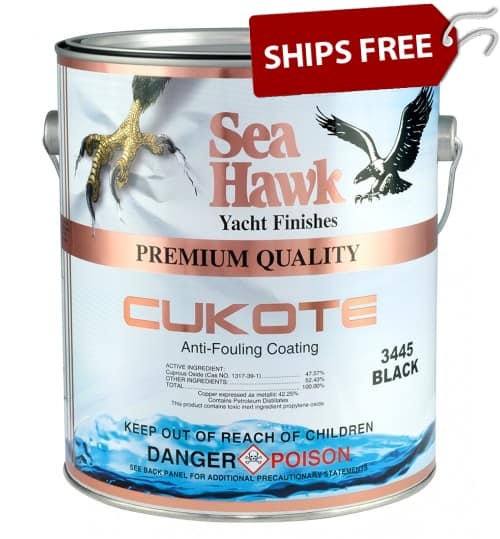
Sea Hawk Cukote Paint Reviews

I thought the value was great even though I haven’t used it yet due to my marina being backed up with haul outs so Ill probably get hauled out after hurricane season is over, plus it will be cooler then as well.- Michael W.

The quart I bought was surprisingly heavy but instructions were clear and it was easy to apply. Certainly recommend gloves and a disposable brush. – Peter S.

Boat had never been painted and I prepped and applied 2 coats below the waterline and 3 coats on the waterline . Held up for 2 years in coastal NC waters . Very little growth to remove . Pressure washer blew most of it off . I would call Sea Hawk Cukote a very good product. – D. Bordeaux

After more than 40 years experimenting with different bottom paints on many boats, I’d have to say Sea Hawk paints are the best (least fouling, longest-lasting) ablative paints I have found. – Stephen P.

Quick delivery good pricing. – Robert S.

I kept my sailboat on the Chesapeake in an area with warm brackish water very conducive to barnacle growth. Cukote worked better. – Robert P.

Excellent product. Alfred L.

IMO, this is the best bottom paint. Only requires one coat. – Gerald D.

It is on our boat now and we needed some touch up. – Carol S.

Great product to use on boat bottoms. – Jeffrey R.

Great product and worth every penny!! Joe F., March 3, 2023

Long lasting. William G., Feb 25, 2023

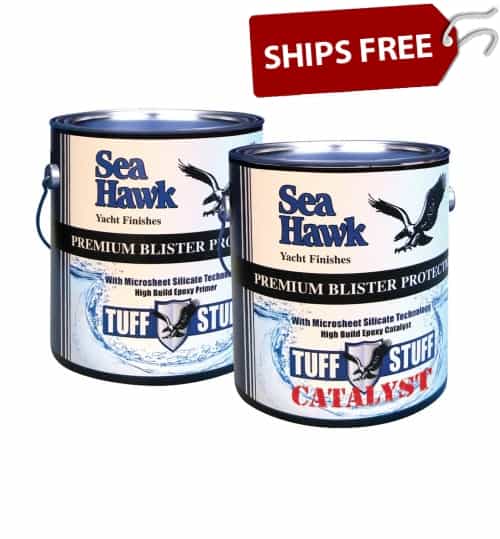
Sea Hawk Tuff Stuff Reviews

Cleaned the surface, highly recommend a fan or 2 when using. Does have strong odor like any reducer or thinner. – Peter P.

A high quality epoxy paint. I will order it again. – Edward O.

Applied well, pretty happy so far! – Sam B.

Love it. Easy to work with and tough when cured ! Easy to wet sand also in prep for color coats ! – James W.

Very easy to use, just follow the directions. I have not put the boat in the water yet, but I don’t forsee any problems. – Sharon T.

The Sea Hawk Tuff Stuff was very easy to work with and the 1:1 ratio made mixing easy and error free. It went on easily and dried quickly so that I could apply 2 coats plus bottom paint In one day on a 46ft. Motor Yacht. The Sea Hawk Tropicoat was also easy to go on ( I recommend thinning as the paint is extremely heavy with copper). It dries quickly and have a hard service in 15 minutes. I am very happy with both products. – George M.

Great primer, the name says it all. – Eric H.

Very good product. – Nicholas C.

The Different Types of Boat Paint


In this article, we will briefly describe some of the different types of boat paint that can be used to repair, restore, protect, and make your boat looks its best.

Quick Answer: What Are the Different Types of Boat Paint?

The main types of boat paint include bottom paint, topside paint, deck paint, gelcoat, primers, barrier coats, varnish, and specialty marine coatings. Each type is designed for a different part of the boat, so the best choice depends on whether you are painting below the waterline, above the waterline, decks, fiberglass, wood, aluminum, steel, or underwater running gear.

For most boat owners, the most important distinction is between bottom paint and topside paint. Bottom paint is used below the waterline to help prevent marine growth. Topside paint is used above the waterline to improve appearance and protect exposed surfaces from sun, salt, moisture, and wear.

Boat Paint Types Comparison

Boat Paint Type Best Used For What It Does
Bottom Paint Hull areas below the waterline Helps reduce barnacles, algae, slime, and other marine growth on boats kept in the water.
Ablative Bottom Paint Cruising boats, sailboats, powerboats, and seasonal use Gradually wears away to expose fresh antifouling protection and reduce paint buildup.
Hard Bottom Paint Fast boats, racing boats, trailered boats, and boats cleaned regularly Forms a durable coating that resists scrubbing and can be sanded smooth.
Topside Paint Hull sides, cabins, trim, and surfaces above the waterline Provides color, gloss, UV resistance, and protection for exposed marine surfaces.
Deck Paint Boat decks, walkways, cockpit floors, and high-traffic areas Protects surfaces from wear and can be used with non-skid additives for better traction.
Gelcoat Fiberglass repair, restoration, chips, gouges, and cosmetic repairs Restores or repairs the original fiberglass surface and creates a hard, glossy finish.
Marine Primer Prepared fiberglass, wood, metal, or old paint before topcoating Improves adhesion, sealing, and surface uniformity before applying finish coats.
Epoxy Barrier Coat Fiberglass hulls below the waterline Helps seal the hull and protect against water intrusion before bottom paint is applied.
Marine Varnish Wood trim, teak, mahogany, rails, hatches, and brightwork Protects wood from sunlight, moisture, salt, and weather while enhancing appearance.
Specialty Coatings Props, running gear, inflatables, aluminum, steel, or specific substrates Designed for surfaces or conditions that require a specialized coating system.

Best Boat Paint Choice by Project

Project Recommended Paint Type Why
Painting the bottom of a boat kept in the water Antifouling bottom paint Bottom paint is designed to help prevent marine growth below the waterline.
Painting the hull sides above the waterline Topside paint Topside paint provides gloss, color, UV resistance, and weather protection.
Painting boat decks or walkways Deck paint with non-skid additive Helps protect high-traffic areas and improve traction underfoot.
Repairing fiberglass chips or gouges Gelcoat repair product Gelcoat is commonly used to repair and blend damaged fiberglass surfaces.
Sealing a fiberglass hull before bottom paint Epoxy barrier coat Barrier coat helps seal fiberglass before antifouling paint is applied.
Painting aluminum boats Aluminum-safe primer and paint system Aluminum requires compatible coatings, especially below the waterline.
Restoring exterior wood trim Marine varnish or polyurethane varnish Varnish protects wood while enhancing the natural grain and appearance.
Painting propellers and running gear Specialty running gear coating Props, shafts, and running gear need coatings designed for metal, motion, and underwater exposure.
Changing the color of a fiberglass boat Topside paint or professional marine paint system Marine paint is often more practical than re-gelcoating for larger color changes.

What to Consider Before Choosing Boat Paint

Before choosing boat paint, first identify where the coating will be used. A paint designed for topsides should not automatically be used below the waterline, and bottom paint should not be used as a general-purpose finish for decks, cabins, or trim. The coating must match the surface, exposure, and purpose.

You should also consider the boat material, existing coating, water conditions, boat speed, storage method, and maintenance routine. Fiberglass, wood, aluminum, steel, and previously painted surfaces may each require different primers, preparation steps, and compatible paint systems.

Bottom Paint vs Topside Paint

Feature Bottom Paint Topside Paint
Used Where? Below the waterline Above the waterline
Main Purpose Helps reduce marine growth Improves appearance and protects from sun, salt, and weather
Finish May be matte, semi-smooth, hard, or ablative depending on the product Usually chosen for gloss, color, and appearance
Common Surfaces Underwater fiberglass, wood, steel, or properly prepared aluminum Fiberglass, wood, metal, cabins, hull sides, and trim above the waterline
Can It Be Used Interchangeably? No. Bottom paint is not a substitute for topside paint. No. Topside paint is not a substitute for antifouling bottom paint.

Common Questions About the Different Types of Boat Paint

What kind of paint do you use on a boat?

The kind of paint you use depends on the part of the boat being painted. Use bottom paint below the waterline, topside paint above the waterline, deck paint for walkways and cockpit areas, gelcoat for fiberglass repairs, and marine varnish for exposed wood.

What is the difference between bottom paint and topside paint?

Bottom paint is used below the waterline to help prevent marine growth. Topside paint is used above the waterline to protect and improve the appearance of hull sides, cabins, trim, and other exposed surfaces. They are designed for different jobs and should not be used interchangeably.

What paint should I use below the waterline?

Below the waterline, use antifouling bottom paint that is compatible with your hull material, existing paint, water conditions, and boat usage. In some cases, a primer or epoxy barrier coat may be needed before applying bottom paint.

What paint should I use above the waterline?

Above the waterline, use marine topside paint, polyurethane paint, enamel, or another coating designed for exterior marine exposure. These paints are made to provide color, gloss, UV resistance, and protection against salt, moisture, and weather.

Can I use regular paint on a boat?

Regular household or non-marine paint is usually not recommended for boats. Marine paints are designed for water exposure, sunlight, salt, abrasion, flexing, and the specific surfaces found on boats. Using the wrong paint can lead to peeling, fading, poor adhesion, or coating failure.

Is gelcoat the same as boat paint?

No. Gelcoat is the original outer finish used on many fiberglass boats and is often used for fiberglass repairs. Boat paint is a coating applied over a prepared surface for protection, color, or antifouling performance. Gelcoat and boat paint are related, but they are not the same product.

Do I need primer before painting a boat?

Primer may be needed depending on the surface, existing coating, and paint system. Primers can improve adhesion, seal repairs, create a smoother surface, and help the finish coat perform properly. Always follow the paint manufacturer’s surface preparation and primer recommendations.

What is the best boat paint for fiberglass?

The best boat paint for fiberglass depends on the area being painted. Use bottom paint below the waterline, topside paint above the waterline, deck paint for walking surfaces, and gelcoat repair products for chips, gouges, or cosmetic fiberglass repairs.

What is the best boat paint for aluminum?

Aluminum boats require coatings that are compatible with aluminum. Use an aluminum-safe primer and paint system, especially below the waterline. Avoid copper-based bottom paints on aluminum unless the product is specifically labeled safe for aluminum use.

How do I know which boat paint to buy?

Start by identifying the surface material, where the paint will be used, and whether the area is above or below the waterline. Then check the existing coating, compatibility requirements, water conditions, and manufacturer instructions before selecting primer, paint, or related products.

Recommended Boat Paint Products and Supplies

Bottom Paint Store carries bottom paint, topside paint, deck paint, gelcoat repair products, primers, epoxy barrier coats, marine varnish, specialty coatings, rollers, brushes, sandpaper, solvents, cleaners, paint removers, and application supplies. The right product depends on your boat material, project type, existing coating, and whether the surface is above or below the waterline.

What Are the Different Types of Boat Paint?

The main types of boat paint include bottom paint, topside paint, deck paint, gelcoat, primers, barrier coats, varnish, and specialty marine coatings. Each type is designed for a different part of the boat, so the best choice depends on whether you are painting below the waterline, above the waterline, decks, fiberglass, wood, aluminum, steel, or underwater running gear.

For most boat owners, the most important distinction is between bottom paint and topside paint. Bottom paint is used below the waterline to help prevent marine growth. Topside paint is used above the waterline to improve appearance and protect exposed surfaces from sun, salt, moisture, and wear.

Boat Paint Types Comparison

Boat Paint Type Best Used For What It Does
Bottom Paint Hull areas below the waterline Helps reduce barnacles, algae, slime, and other marine growth on boats kept in the water.
Ablative Bottom Paint Cruising boats, sailboats, powerboats, and seasonal use Gradually wears away to expose fresh antifouling protection and reduce paint buildup.
Hard Bottom Paint Fast boats, racing boats, trailered boats, and boats cleaned regularly Forms a durable coating that resists scrubbing and can be sanded smooth.
Topside Paint Hull sides, cabins, trim, and surfaces above the waterline Provides color, gloss, UV resistance, and protection for exposed marine surfaces.
Deck Paint Boat decks, walkways, cockpit floors, and high-traffic areas Protects surfaces from wear and can be used with non-skid additives for better traction.
Gelcoat Fiberglass repair, restoration, chips, gouges, and cosmetic repairs Restores or repairs the original fiberglass surface and creates a hard, glossy finish.
Marine Primer Prepared fiberglass, wood, metal, or old paint before topcoating Improves adhesion, sealing, and surface uniformity before applying finish coats.
Epoxy Barrier Coat Fiberglass hulls below the waterline Helps seal the hull and protect against water intrusion before bottom paint is applied.
Marine Varnish Wood trim, teak, mahogany, rails, hatches, and brightwork Protects wood from sunlight, moisture, salt, and weather while enhancing appearance.
Specialty Coatings Props, running gear, inflatables, aluminum, steel, or specific substrates Designed for surfaces or conditions that require a specialized coating system.

Best Boat Paint Choice by Project

Project Recommended Paint Type Why
Painting the bottom of a boat kept in the water Antifouling bottom paint Bottom paint is designed to help prevent marine growth below the waterline.
Painting the hull sides above the waterline Topside paint Topside paint provides gloss, color, UV resistance, and weather protection.
Painting boat decks or walkways Deck paint with non-skid additive Helps protect high-traffic areas and improve traction underfoot.
Repairing fiberglass chips or gouges Gelcoat repair product Gelcoat is commonly used to repair and blend damaged fiberglass surfaces.
Sealing a fiberglass hull before bottom paint Epoxy barrier coat Barrier coat helps seal fiberglass before antifouling paint is applied.
Painting aluminum boats Aluminum-safe primer and paint system Aluminum requires compatible coatings, especially below the waterline.
Restoring exterior wood trim Marine varnish or polyurethane varnish Varnish protects wood while enhancing the natural grain and appearance.
Painting propellers and running gear Specialty running gear coating Props, shafts, and running gear need coatings designed for metal, motion, and underwater exposure.
Changing the color of a fiberglass boat Topside paint or professional marine paint system Marine paint is often more practical than re-gelcoating for larger color changes.

What to Consider Before Choosing Boat Paint

Before choosing boat paint, first identify where the coating will be used. A paint designed for topsides should not automatically be used below the waterline, and bottom paint should not be used as a general-purpose finish for decks, cabins, or trim. The coating must match the surface, exposure, and purpose.

You should also consider the boat material, existing coating, water conditions, boat speed, storage method, and maintenance routine. Fiberglass, wood, aluminum, steel, and previously painted surfaces may each require different primers, preparation steps, and compatible paint systems.

Bottom Paint vs Topside Paint

Feature Bottom Paint Topside Paint
Used Where? Below the waterline Above the waterline
Main Purpose Helps reduce marine growth Improves appearance and protects from sun, salt, and weather
Finish May be matte, semi-smooth, hard, or ablative depending on the product Usually chosen for gloss, color, and appearance
Common Surfaces Underwater fiberglass, wood, steel, or properly prepared aluminum Fiberglass, wood, metal, cabins, hull sides, and trim above the waterline
Can It Be Used Interchangeably? No. Bottom paint is not a substitute for topside paint. No. Topside paint is not a substitute for antifouling bottom paint.

Common Questions About the Different Types of Boat Paint

What kind of paint do you use on a boat?

The kind of paint you use depends on the part of the boat being painted. Use bottom paint below the waterline, topside paint above the waterline, deck paint for walkways and cockpit areas, gelcoat for fiberglass repairs, and marine varnish for exposed wood.

What is the difference between bottom paint and topside paint?

Bottom paint is used below the waterline to help prevent marine growth. Topside paint is used above the waterline to protect and improve the appearance of hull sides, cabins, trim, and other exposed surfaces. They are designed for different jobs and should not be used interchangeably.

What paint should I use below the waterline?

Below the waterline, use antifouling bottom paint that is compatible with your hull material, existing paint, water conditions, and boat usage. In some cases, a primer or epoxy barrier coat may be needed before applying bottom paint.

What paint should I use above the waterline?

Above the waterline, use marine topside paint, polyurethane paint, enamel, or another coating designed for exterior marine exposure. These paints are made to provide color, gloss, UV resistance, and protection against salt, moisture, and weather.

Can I use regular paint on a boat?

Regular household or non-marine paint is usually not recommended for boats. Marine paints are designed for water exposure, sunlight, salt, abrasion, flexing, and the specific surfaces found on boats. Using the wrong paint can lead to peeling, fading, poor adhesion, or coating failure.

Is gelcoat the same as boat paint?

No. Gelcoat is the original outer finish used on many fiberglass boats and is often used for fiberglass repairs. Boat paint is a coating applied over a prepared surface for protection, color, or antifouling performance. Gelcoat and boat paint are related, but they are not the same product.

Do I need primer before painting a boat?

Primer may be needed depending on the surface, existing coating, and paint system. Primers can improve adhesion, seal repairs, create a smoother surface, and help the finish coat perform properly. Always follow the paint manufacturer’s surface preparation and primer recommendations.

What is the best boat paint for fiberglass?

The best boat paint for fiberglass depends on the area being painted. Use bottom paint below the waterline, topside paint above the waterline, deck paint for walking surfaces, and gelcoat repair products for chips, gouges, or cosmetic fiberglass repairs.

What is the best boat paint for aluminum?

Aluminum boats require coatings that are compatible with aluminum. Use an aluminum-safe primer and paint system, especially below the waterline. Avoid copper-based bottom paints on aluminum unless the product is specifically labeled safe for aluminum use.

How do I know which boat paint to buy?

Start by identifying the surface material, where the paint will be used, and whether the area is above or below the waterline. Then check the existing coating, compatibility requirements, water conditions, and manufacturer instructions before selecting primer, paint, or related products.

Boat Paint Selection Checklist

  • Identify whether the surface is above or below the waterline
  • Confirm the boat material: fiberglass, wood, aluminum, steel, or inflatable surface
  • Check the condition and type of existing paint or gelcoat
  • Decide whether the goal is antifouling protection, appearance, repair, traction, or wood protection
  • Choose the correct primer or barrier coat when required
  • Confirm compatibility before painting over an old coating
  • Check dry time, recoat time, cure time, and launch window
  • Use marine-grade rollers, brushes, sandpaper, solvents, and safety supplies

Recommended Boat Paint Products and Supplies

Bottom Paint Store carries bottom paint, topside paint, deck paint, gelcoat repair products, primers, epoxy barrier coats, marine varnish, specialty coatings, rollers, brushes, sandpaper, solvents, cleaners, paint removers, and application supplies. The right product depends on your boat material, project type, existing coating, and whether the surface is above or below the waterline.

Topside boat paint is a type of paint you apply above the waterline of a boat. This can include the sides of the hull, deck, as well as interior. Marine topside paints usually consist of one-part polyurethane, two-part polyurethane, and alkyd marine enamel. There are also buffable, two-part acrylic urethanes. Due to the sun’s rays, your boat is vulnerable to UV damage so coating your upper hull and deck with good topside paint can go a long way to protecting your boat.

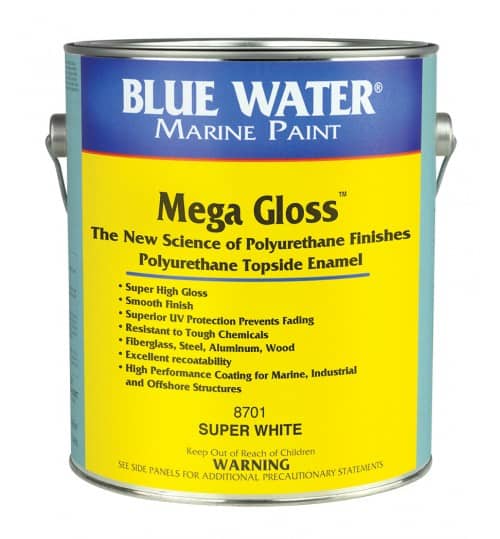
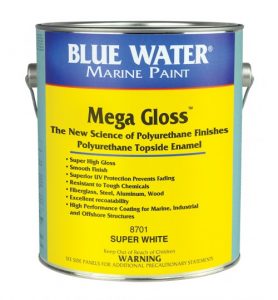
Blue Water Marine Topside Paints are superior in quality, higher in value and typically, priced better than store brands


Aluminum boat paint can be used for many purposes including to camouflage, decorate, refurbish, or restore and touch up aluminum boat surfaces. Paint that is safe for aluminum and can be applied without a primer and can be used below or above the waterline. If you don’t take care of your aluminum boat, it will eventually start to show its age. One way to keep your aluminum boat looking new is to touch up the paint when it starts to fade or chip. Touching up the paint on your aluminum boat is a relatively simple process.

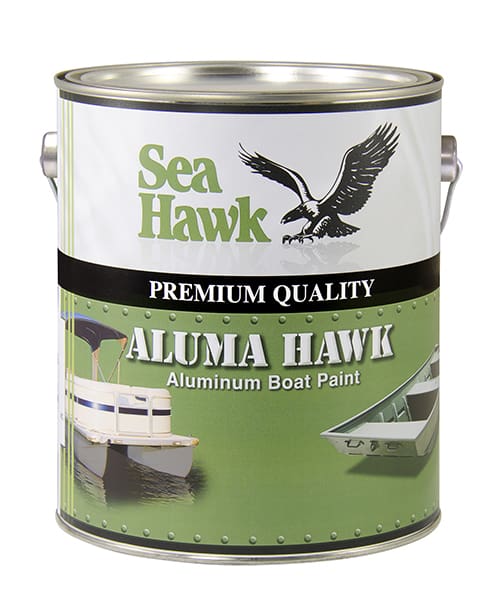
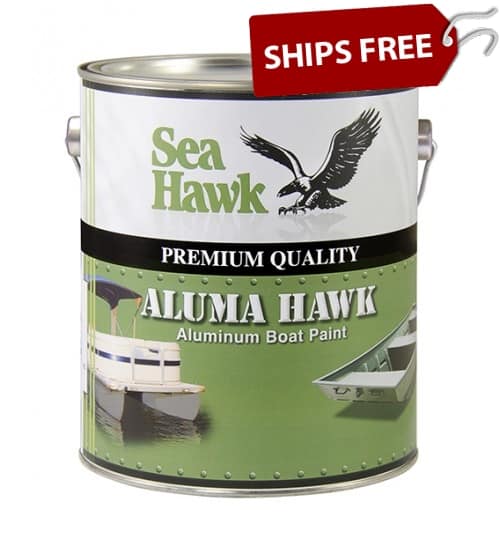
Aluma Hawk is a high-solids, quick drying corrosion inhibiting coating designed for use on aluminum. It requires no primer and can be applied below or above the waterline with no antifouling characteristics; it also contains dual purpose phenolic resin which makes it possible to use as both primer (for metals) AND topcoat if needed!

Aluma Hawk Paint
Aluma Hawk is a fast drying, high-solids, corrosion-inhibiting coating designed for use on aluminum with no need for a primer.

Duralux Paint is available in a variety of colors to satisfy the most discriminating boat owner’s eye, Duralux offers a complete line of products including enamels and spar varnish. Duralux aluminum boat paint is a solid choice for those who want great protection for their aluminum boat.

Duralux Aluminum Boat Green


Fiberglass coatings usually consist of gelcoat, gelcoat putties, resins, restoration solutions, repair kits, and tools/materials. Gel coats are often used to touch up or repair a boat’s finish. They have a much shorter shelf life and can be a lot more difficult to apply than paint so the manufacturer’s instructions must be carefully followed to ensure a successful result.


Gelcoat can be used to patch existing gel coat, fiberglass repairs, and new construction and projects.


Wood boat paint typically includes traditional types of oil-based finishes, as two-part paints tend to be less flexible. Because wood can flex and swell, especially along seams, expensive finishes will not last any longer than traditional stain or paint. Teak can be used to prevent fading on a boat’s wood finish. If left untreated, it will often fade which leads to the need to clean or treat the wood so it is not susceptible to rot, mildew, and discoloration.

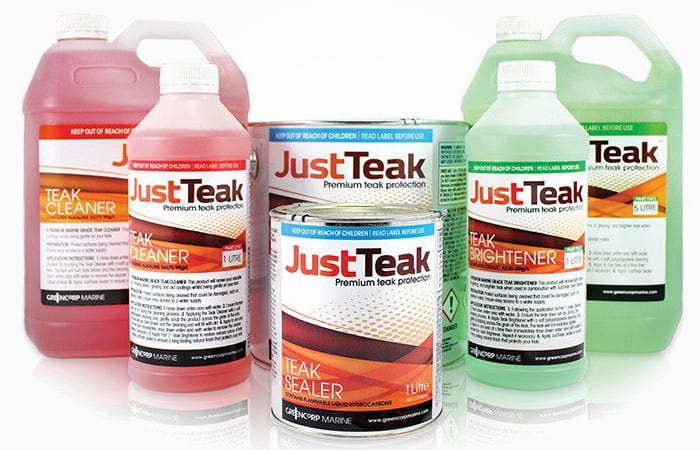
Teak wood cleaner
Just Teak is a simple solution to clean, brighten & protect your teak.


Bottom boat paint is antifouling paint or coating designed to diminish weeds, barnacles, and other aquatic organisms that can attach below the waterline of a boat and cause damage. Bottom paint includes ablative bottom paint, hard boat bottom paint, aluminum safe bottom paint, primers for bottom paint, and boat bottom paint remover.

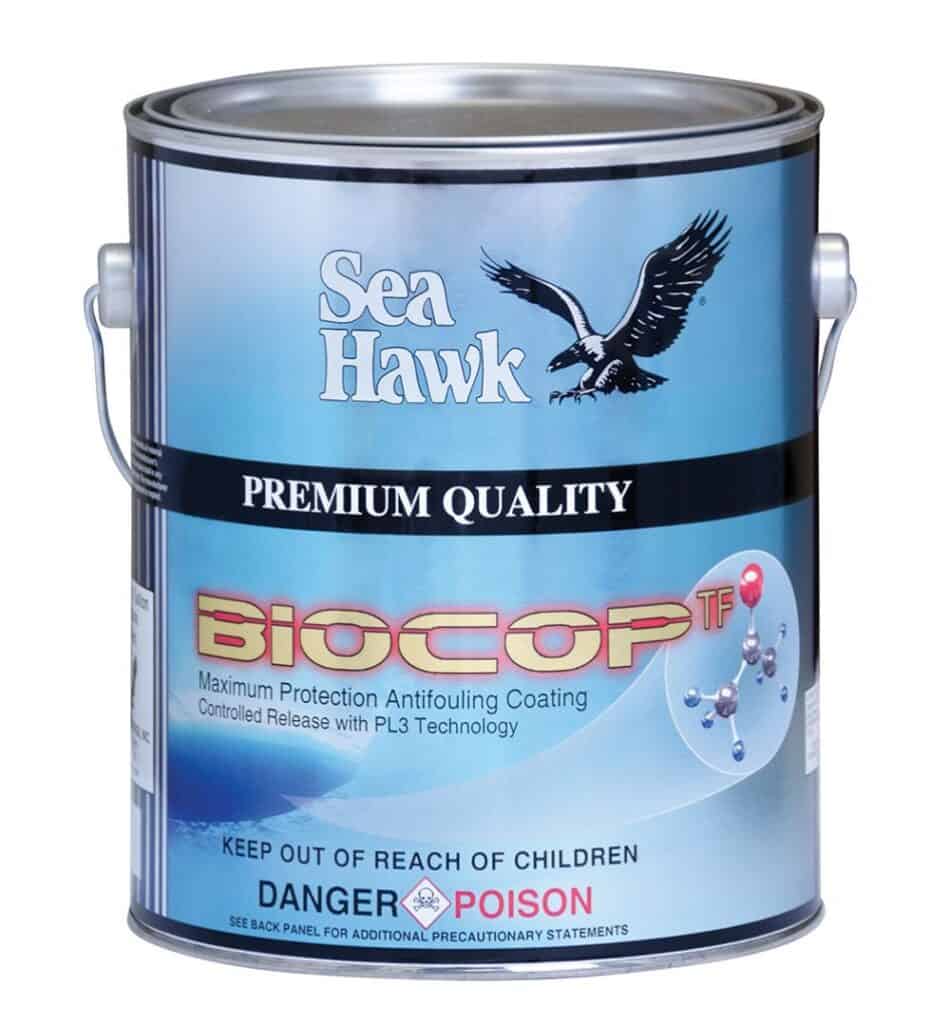
Biocop bottom paint uses the newest biocide technology which is safe for the environment.

Boat Paint Selection Checklist

  • Identify whether the surface is above or below the waterline
  • Confirm the boat material: fiberglass, wood, aluminum, steel, or inflatable surface
  • Check the condition and type of existing paint or gelcoat
  • Decide whether the goal is antifouling protection, appearance, repair, traction, or wood protection
  • Choose the correct primer or barrier coat when required
  • Confirm compatibility before painting over an old coating
  • Check dry time, recoat time, cure time, and launch window
  • Use marine-grade rollers, brushes, sandpaper, solvents, and safety supplies

If you need assistance selecting the right marine boat paint for your next project see Bottom Paint Store’s how-to articles or call our technical support department Monday-Friday from 8:30-5:00 pm EST 888-505-2313.

What Equipment is Needed to do a Proper Application of Antifouling Bottom Paint?

Antifouling bottom paint is needed if you store your boat in the water. If left in the water without protection, marine growth may attach to your boat’s exposed hull. Marine growth slows a boat down and increases fuel consumption. Here are the items that you will need in addition to the bottom paint for the proper anti-fouling bottom paint application.

60–100 grit – Suitable for the removal of paint or to sand gel coat prior to the application of antifouling paint.
• After sanding remove sanding residue by wiping with a cloth that has been dampened with the proper solvent.
Masking Tape – When it is necessary to mask off areas use a high quality clean edge masking tape, especially when the masking tape will be left on the surface for a long time.
• Brushes – For antifouling paints use a natural bristle brush but not necessarily one of as good quality as you would use to apply topside finishes.
• Rollers – Most solvent resistant rollers will have a phenolic core and will say that they are for use with oil based paints or epoxies. For antifouling paint and epoxy primers, use a 3/8”-1/2” nap roller.

Painting an Aluminum Hull with Non Antifouling Paint

Last Updated: February 9, 2026

Quick Recommendation

Painting an Aluminum Hull with Non-Antifouling Paint

  • Use non-antifouling paint if the boat is trailered or stored dry and doesn’t remain in the water long enough to foul.
  • Prep aluminum correctly: Degrease, remove oxidation, and lightly abrade; apply an etching or epoxy primer made for aluminum.
  • Choose aluminum-compatible coatings: Use topside or industrial marine paints approved for aluminum—avoid copper-containing products.
  • Bottom line: Non-antifouling paint works on aluminum hulls when paired with the proper aluminum primer and dry-storage use.

Tip: If the boat will stay in the water for extended periods, switch to a copper-free antifouling system designed for aluminum.

When painting a boat used for hunting/fishing, such as a Jon Boat, typically a flat finish is desired so you’ll want to use one of our camouflage paints. A primer coat is used to help the paint adhere to the aluminum surface and provides an extra layer of protection from corrosion. You may also use  Aluma Hawk, which is a paint and primer in one.

The Aluminum Boat Paint or Aluma Hawk (available in Black, Jon Boat Green, Blue, Sand, White or Aluminum Grey), will serve as paint and primer in one so no need to purchase a primer! Aluma Hawk is one of the easiest and most popular paints for your aluminum boat, and available in (white, blue, Jon boat green, black, aluminum grey, and sand). These are both a paint/primer in one that can be applied to most surfaces with little preparation needed. For more application details see our ‘how to paint an aluminum Jon Boat’ article.

How do you paint Aluma Hawk on a boat?

You can use a brush, roller, or spray gun. Most applications will need 2 coats of Aluma Hawk following the proper dry time requirements. No sanding is necessary between coats of Aluma Hawk if less than 48 hours between applying coats. If needed, MEK (Methyl Ethly Ketone) can be used for thinning, as well as clean up.

If you desire a gloss finish, look to the Mega Gloss by Blue Water, available in quarts and gallons, is affordable, easy to apply, and only recommended for above the waterline. This topside paint works best in very thin coats and can be used on fiberglass, wood, aluminum, and steel; see the prep recommendations found on the product page on the “how to use” tab. The Mega Gloss Primer is recommended when applied to bare metal, if you have concerns about sealing your aluminum, see the Bottom Protect by Blue Water for a barrier coat. See here for more application tips.
You have many options when painting aluminum. Your use of the boat, the allotted budget, and the amount of time you want to spend on the project may help determine the right paint for you. For more information see our ‘topside boat paint options’.

How to Paint an Aluminum Jon Boat

Last Updated: January 19, 2026


Quick Recommendation

How to Paint a Jon Boat (Aluminum)

  • Use aluminum-safe coatings only: Choose copper-free, aluminum-compatible paint to prevent corrosion.
  • Prep is everything: Thoroughly degrease, lightly sand or scuff, and avoid touching bare aluminum before priming.
  • Prime correctly: Apply an etching or epoxy primer designed for aluminum immediately after prep for proper adhesion.
  • Bottom line: A Jon boat paint job lasts when you use the right primer and aluminum-safe paint—shortcuts lead to peeling and corrosion.

Tip: Never apply traditional copper-based bottom paint directly to aluminum; it can quickly damage the hull.

Paint a Jon Boat

Aluminum Jon Boat

Jon Boats are flat bottom boats manufactured for easy maneuverability in shallow water. The most used material for construction is aluminum, making them lightweight and durable for fishing and hunting.

What kind of paint do you use on an aluminum boat?

Choose a water-resistant aluminum boat paint that adheres to aluminum. Using a sprayer or brush, paint the inside of the boat first. Paint in horizontal strokes for an even coat. The inside coat should dry for 12 hours or so before you paint the exterior.

A camouflage paint job is a good idea for hunters using a Jon boat to help blend into the surrounding land and water; choose your favorite color of Blue Water Mega Gloss for a higher gloss than camouflage paint. The easiest and most popular paint for your boat is the aluminum boat paint green or Aluma Hawk  (white, blue, Jon boat green, black, aluminum grey, sand).  These are both a paint/primer in one that can be applied to most surfaces with little preparation needed.

Make sure you have a location for painting your Jon boat that is free from blowing dust and debris (a garage is ideal).

Surface Prep: The surface must be dry and free of grease, wax, dirt, or other foreign matter. Scrape off all loose paint and dull any gloss area with a light sanding or power brushing. Remove all dust with a cloth dampened with paint thinner and allow to dry, you can use wax and grease remover or acetone. Sand the existing Jon boat paint surface or bare aluminum with 80-100 grit sandpaper.

Use a paint scraper or sander to remove any peeling paint or areas that are likely to cause peeling on your new paint. Don’t worry about scratches because these will make it easier for the new paint to adhere by etching the surface. Use a soft-bristled brush to make sure you remove all debris left from sanding.

Painting a Jon Boat:

A primer coat is used to help the paint adhere to the Jon boat aluminum surface and provides an extra layer of protection from corrosion. When using the Duralux Camouflage Paint on bare aluminum apply two coats of primer after sanding. If using  Aluma Hawk, these can be your primer and paint.

Aluma Hawk PaintIf you choose to use a simple one-step system on your bare aluminum Jon boat, Aluma Hawk (available in Black, Jon Boat Green, Sand/Tan, Blue, White or Aluminum Grey) is an excellent choice since it can be used as a primer/paint in one over bare aluminum. You should prep the surface as stated above, and then wipe down the bare aluminum Jon boat with white vinegar prior to coating. This acts as an acid and will “etch” the surface for better adhesion.  You will need to apply two coats of this flat-finish paint.

To make the inside have a non-skid surface use the Non-Skid Additive with the Aluma Hawk. See the ‘how to apply non-skid paints’ for more details.

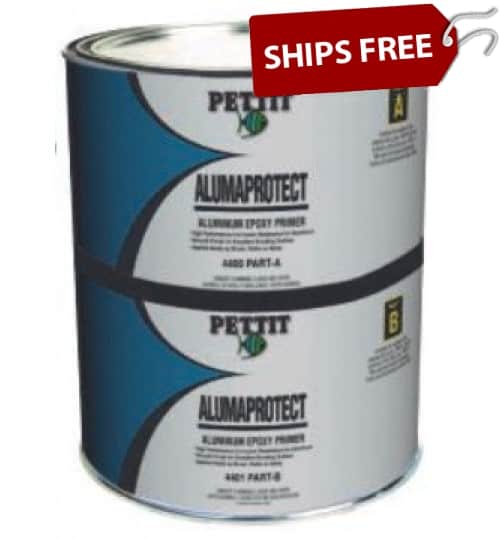
If you need the ideal barrier coat to put over roughed bare aluminum then consider Pettit Marine’s Aluma Protect Epoxy Primer. This aluminum primer kit contains strontium chromate and is designed to form the ideal barrier coat over roughed bare aluminum. 

aluminum primer


How to Paint an Aluminum Boat

If you’re the owner of an aluminum boat, you may be wondering how to go about painting it. While the aluminum hull itself doesn’t need to be painted, the aluminum deck does need to be protected from the elements. Here are a few tips on how to paint an aluminum boat:

  1. First, clean the aluminum deck with soap and water. If there are any areas of corrosion, sand them down until they’re smooth.
  2. Next, apply a primer designed for aluminum boats. This will help the paint adhesion and prevent future corrosion. If you use Aluma Hawk, a quick-drying, high-solids, corrosion-inhibiting coating designed for use on aluminum, there is no need for a primer. Same goes for Duralux marine enamels, which is a vinyl-type coating for aluminum and galvanized surfaces and has excellent adhesion that eliminates the need for a primer.
  3. Once the primer is dry, begin applying the boat paint of your choice. Use a brush or roller designed for use with oil-based paints and try and paint in thin coats. Applying thin coats of paint will help prevent runs and ensure a smooth, even finish. Work in small sections and follow the manufacturer’s instructions carefully.
  4. Once the paint is dry, enjoy your newly-painted aluminum boat!

Painting an aluminum Jon boat correctly requires thorough preparation, the right primer and paint, and patience between coats. Following these steps will help ensure a long-lasting, durable finish that stands up to frequent use on the water.

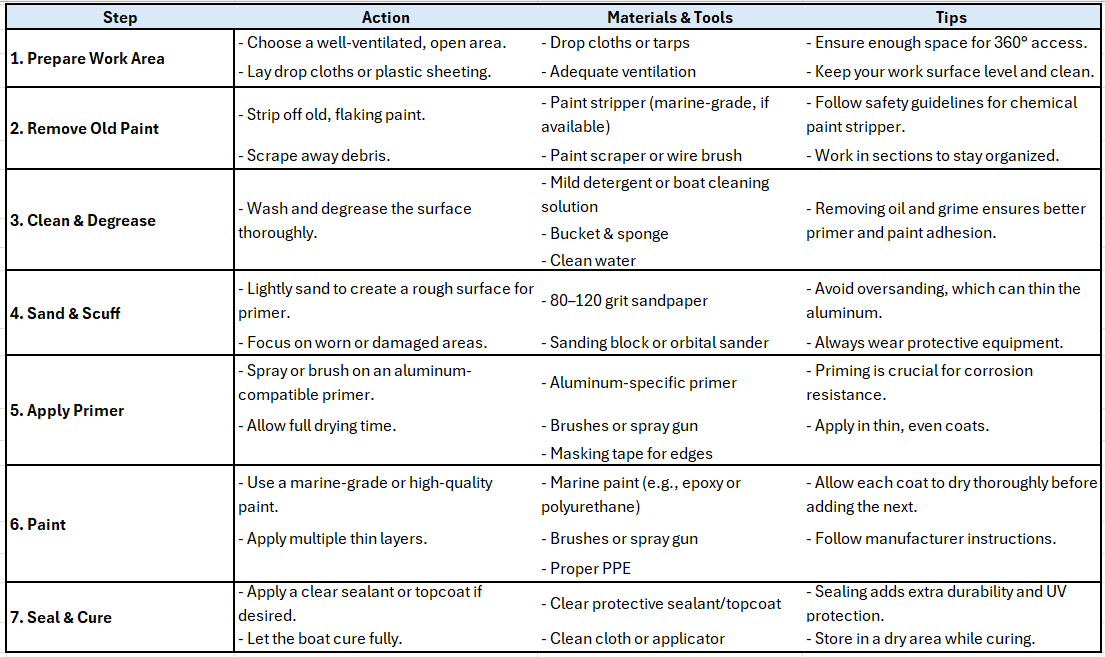
How to paint an aluminum jon boat chart


Painting an aluminum boat such as a jon boat, pontoon or fishing boat, is a process that takes preparation and the right supplies. If you’re looking to tackle this project on your own, be sure to read our how to articles and follow the paint manufacturers steps carefully. If you have any questions or need assistance, don’t hesitate to call the Bottom Paint Store customer service team – we’re happy to help!