
Last Updated: January 27, 2026
Quick Recommendation
Should You Use Gelcoat or Boat Paint?
Use gelcoat when you are repairing or restoring the original fiberglass surface and want a thick, durable finish that matches the boat’s existing gelcoat. Use boat paint when you want an easier refinishing option, a new color, or a coating system designed for topsides, decks, or below-the-waterline protection.
For most fiberglass boat owners, the right choice depends on the condition of the surface, where the coating will be used, and how much preparation and finishing work you want to do. Gelcoat is often best for fiberglass repairs and original-style restoration, while marine paint is often easier for cosmetic updates, color changes, and ongoing maintenance.
Gelcoat vs Boat Paint Comparison
| Feature | Gelcoat | Boat Paint |
|---|---|---|
| Best Use | Fiberglass repair, restoration, and matching original gelcoat surfaces | Refinishing topsides, decks, cabins, and underwater areas with the proper paint system |
| Surface Type | Most commonly used on fiberglass boats | Can be used on fiberglass, wood, aluminum, steel, and other properly prepared marine surfaces |
| Application Difficulty | More labor-intensive and usually requires careful mixing, sanding, and polishing | Often easier for DIY boat owners, depending on the paint type |
| Finish | Thick, hard, glossy finish when applied and polished correctly | Available in gloss, semi-gloss, satin, non-skid, antifouling, and specialty finishes |
| Color Changes | Possible, but can require more effort to apply and finish evenly | Usually better for changing or refreshing the color of a boat |
| Repairs | Excellent for chips, gouges, scratches, and fiberglass cosmetic repairs | Good for recoating larger areas after proper priming and surface preparation |
| Below the Waterline | Not a substitute for antifouling bottom paint | Bottom paint is specifically designed for underwater antifouling protection |
| Maintenance | Can be sanded, compounded, polished, and repaired | Can often be touched up or recoated more easily, depending on the coating system |
| Best For DIY? | Good for small repairs, but larger jobs require more skill | Often better for DIY refinishing and repainting projects |
Best Choice by Boat Project
| Project | Better Choice | Why |
|---|---|---|
| Repairing small chips or gouges in fiberglass | Gelcoat | Gelcoat repair products are designed to fill and blend damaged fiberglass surfaces. |
| Restoring faded fiberglass | Gelcoat first, paint if needed | Light oxidation may be restored by compounding and polishing gelcoat before repainting is necessary. |
| Changing the color of the boat | Boat paint | Marine topside paint is usually easier and more practical for full color changes. |
| Painting the bottom of the boat | Bottom paint | Antifouling bottom paint is designed to help protect underwater hull areas from marine growth. |
| Painting decks or walkways | Boat paint with non-skid additive | Deck coatings and non-skid systems help improve traction and durability in high-traffic areas. |
| Professional fiberglass restoration | Gelcoat | Gelcoat can restore the original fiberglass-style finish when properly sprayed, cured, sanded, and polished. |
| DIY topside refinishing | Boat paint | One-part topside paints are generally easier for boat owners to apply with brush, roller, or spray methods. |
| Fixing below-waterline fiberglass damage | Fiberglass repair, barrier coat, then bottom paint | The damaged area should be repaired and sealed before applying the proper underwater coating system. |
What to Consider Before Choosing Gelcoat or Boat Paint
Before deciding between gelcoat and boat paint, look at the surface condition, location of the repair, desired finish, and how the boat is used. If the existing gelcoat is only faded or lightly oxidized, it may be possible to restore it with cleaning, compounding, and polishing before applying new coating.
If the surface has chips, gouges, cracks, or exposed fiberglass, gelcoat repair may be the better first step. If the surface is sound but unattractive, stained, or ready for a new color, a marine paint system may be more practical. For underwater hull areas, use products designed for below-the-waterline applications, such as barrier coat and antifouling bottom paint.
Common Questions About Gelcoat vs Boat Paint
Is gelcoat better than boat paint?
Gelcoat is better when repairing or restoring a fiberglass boat’s original surface. Boat paint is often better when you want to refinish, change color, or apply a coating designed for topsides, decks, or underwater protection. The better choice depends on the project, not just the product.
Can you paint over gelcoat?
Yes, you can paint over gelcoat if the surface is clean, dry, sound, sanded, and properly prepared. Faded or oxidized gelcoat should be cleaned and sanded before painting, and some projects may require primer for proper adhesion and long-term performance.
Can you apply gelcoat over paint?
Gelcoat should generally not be applied over standard boat paint unless the product manufacturer specifically allows it. Gelcoat is usually applied over fiberglass, properly prepared gelcoat, or compatible repair materials. If the surface is painted, the paint may need to be removed before gelcoat repair.
Should I restore faded gelcoat or repaint the boat?
If the gelcoat is faded but still thick and intact, try cleaning, compounding, and polishing first. If the gelcoat is badly worn, cracked, thin, stained, or difficult to restore, repainting or re-gelcoating may be a better option.
What is the difference between gelcoat and topside paint?
Gelcoat is the thick outer finish commonly found on fiberglass boats. Topside paint is a marine coating used above the waterline on hull sides, cabins, decks, and trim. Topside paint is often easier to apply for refinishing, while gelcoat is commonly used for fiberglass repairs and original-style restoration.
Can gelcoat be used below the waterline?
Gelcoat is used on fiberglass hulls, but it is not the same as antifouling bottom paint. If the boat stays in the water, the underwater hull usually needs the proper bottom paint system to help reduce marine growth.
Does boat paint last longer than gelcoat?
It depends on the product, surface preparation, exposure, maintenance, and where the coating is used. A properly maintained gelcoat surface can last many years, while a high-quality marine paint system can also provide long-lasting protection when applied correctly.
Is gelcoat harder to apply than boat paint?
Gelcoat is usually more difficult to apply and finish than one-part boat paint. Gelcoat often requires accurate catalyst mixing, careful film thickness, curing, sanding, compounding, and polishing. Many boat paints are easier for DIY users, especially for topside refinishing.
Can I use automotive paint instead of boat paint?
Automotive paint is not usually the best choice for boats because marine coatings are designed for water, UV exposure, salt, abrasion, and marine conditions. For best results, use a coating system made for the surface and environment where the boat will be used.
Do I need primer before painting over gelcoat?
Some marine paints can be applied over properly prepared gelcoat, while others require primer. Primer may improve adhesion, help seal repairs, and create a better surface for the final coating. Always follow the paint manufacturer’s instructions for surface preparation and primer requirements.
Recommended Gelcoat, Boat Paint, and Repair Supplies
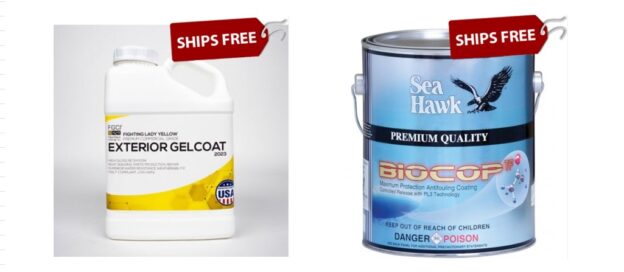
Bottom Paint Store carries gelcoat repair products, marine topside paints, bottom paints, primers, barrier coats, fiberglass repair materials, fairing compounds, sandpaper, solvents, and application supplies. The right product depends on whether you are repairing fiberglass, restoring gelcoat, repainting topsides, refinishing decks, or protecting the bottom of the boat.
Gelcoat vs Boat Paint: Which One Should You Choose?
- Choose Gelcoat if you’re repairing or restoring a fiberglass surface and need a thick, durable, original-style finish that can be sanded and polished.
- Choose Boat Paint if you want a simpler application, faster results, or a cosmetic refresh—especially on larger surfaces.
- Use paint above the waterline for ease and appearance; use bottom paint below the waterline for antifouling protection.
- Bottom line: Gelcoat excels at repairs and durability, while boat paint is best for ease of application and color changes.
Tip: Gelcoat is not antifouling—boats kept in the water still require proper bottom paint below the waterline.
When it comes to boat repair and maintenance, choosing the right kind of coating is crucial to ensure the longevity and overall aesthetics of your vessel. Gelcoat and boat paint are two of the most used coatings for boats, but what are their differences? Which one should you use? In this blog post, we’ll explore and compare the features of gelcoat and boat paint to help you make an informed decision.
First, let’s define what gelcoat and boat paint are.
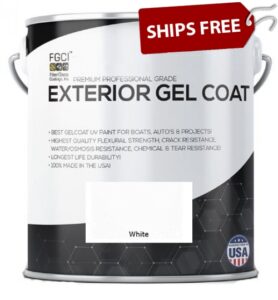
Gelcoat is a protective layer that’s applied directly to the boat’s fiberglass, while boat paint is a coating that can be applied over gelcoat, or directly to other materials like wood or aluminum. Gelcoat is known for its durability and resistance to water, UV rays, and harsh weather conditions. However, it can scratch and crack over time if it is not maintained properly. On the other hand, boat paint offers more flexibility in terms of colors and finish, however it may require more maintenance and upkeep.
Gelcoat or Boat Paint Project Checklist
- Identify whether the surface is fiberglass, existing gelcoat, old paint, wood, aluminum, or steel
- Determine whether the project is above or below the waterline
- Decide whether you are repairing damage, restoring shine, or changing color
- Clean, dewax, sand, and prepare the surface before coating
- Use gelcoat repair products for chips, gouges, and fiberglass cosmetic repairs
- Use topside paint for above-waterline refinishing and color changes
- Use bottom paint for underwater antifouling protection
- Use primer or barrier coat when required by the coating system
- Follow the manufacturer’s instructions for dry time, cure time, sanding, and recoat windows
Composition and Application
Gelcoat is a resin-based coating that is applied directly to the fiberglass surface of a boat during the manufacturing process. It is typically thick and durable, with a glossy finish that can be easily polished. Gelcoat can be pigmented to match different colors and styles, but it is usually white.
When it comes to application, gelcoat is best applied using a gelcoat spray gun or roller, while boat paint can be applied using a spray gun, roller, or brush. Gelcoat can be easily repaired by sanding the damaged area and reapplying the gelcoat, while boat paint repairs may require sanding, filling, and repainting the entire affected area for a seamless finish.
In terms of durability, gelcoat is known for its strength and can last for many years, while boat paint may require repainting every five to ten years, depending on the quality of the paint and the maintenance of the vessel. Gelcoat also blends into the fiberglass, providing a smoother finish that can hide minor imperfections, while boat paint may highlight any dents, cracks, or other irregularities on the surface.
When it comes to cost, gelcoat is generally less expensive than boat paint. However, depending on the quality and extent of the repair or maintenance needed, the cost can vary for both coatings. Gelcoat repairs can range from a few hundred dollars to thousands of dollars, while boat paint jobs can cost from a few thousand dollars to tens of thousands of dollars.
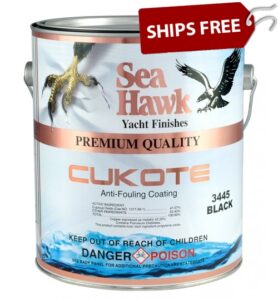
In conclusion, choosing between gelcoat and boat bottom paint depends on your preferences, needs, and budget. If you’re looking for a durable, low-maintenance coating that can blend into the fiberglass and withstand harsh weather conditions, gelcoat may be the better option for you. On the other hand, if you want more flexibility in terms of colors and finish, don’t mind the extra maintenance required, and can afford the cost, boat paint may be the way to go. Ultimately, it’s important to consult with a professional boat service provider to help you make the right decision for your vessel.