The color of boat bottom paint plays a significant role in both the aesthetics of a boat and its performance in the water. While many boat owners choose bottom paint colors based on personal preference or to match their boat’s hull color, there are practical considerations to keep in mind as well.
Quick Answer: Does Bottom Paint Color Affect Boat Performance?
Bottom paint color usually has little direct impact on boat speed or antifouling performance. The type of bottom paint, surface preparation, hull smoothness, paint condition, and proper application matter much more than the color. However, color can affect appearance, visibility, maintenance, and how easily you notice slime, staining, wear, or marine growth.
For most boat owners, the best bottom paint color is the one that looks right with the boat, works with the selected paint formula, and makes maintenance easier. Choose the correct bottom paint type first, then choose the color that best fits your boat and your preferences.
Bottom Paint Color Comparison
| Bottom Paint Color | Best For | What to Consider |
|---|---|---|
| Black | Classic look, strong contrast, many powerboats and sailboats | Hides staining and discoloration well, but may show scratches or worn areas depending on the color underneath. |
| Blue | White hulls, blue trim, and traditional marine color schemes | Popular and attractive, but the shade of blue can vary by paint brand and formula. |
| Red | Traditional antifouling look, classic boats, and contrasting hull colors | Can make wear easier to spot if applied over a different previous color. |
| Green | Boats with green accents or owners wanting a less common color | May blend with algae or slime more than lighter or contrasting colors. |
| Gray | Modern, neutral appearance and boats with gray or black accents | Provides a clean, understated look and may hide some discoloration better than white. |
| White | Light-colored hulls, racing boats, and owners who want a cleaner visual appearance | Shows slime, staining, discoloration, and marine growth more easily than darker colors. |
Best Bottom Paint Color by Goal
| Your Goal | Color Choice to Consider | Why |
|---|---|---|
| Hide stains and discoloration | Black, dark blue, or dark gray | Darker colors usually hide staining, slime marks, and waterline discoloration better. |
| See marine growth more easily | White, light gray, or a contrasting color | Lighter colors can make slime, algae, and fouling easier to see during inspection. |
| Match a classic boat style | Red, blue, or black | These are common traditional bottom paint colors that work well with many hull designs. |
| Create a clean modern look | Gray, black, or white | Neutral colors often pair well with modern hull colors, topsides, and trim. |
| Track paint wear over time | Use a different color than the previous coat | A contrasting color can help show when the top layer is wearing thin. |
| Improve racing performance | Choose the smoothest compatible paint, not just a color | Hull smoothness, paint type, coating thickness, and surface prep matter more than color. |
| Maintain resale-friendly appearance | Black, blue, red, or gray | Common marine colors are usually safer choices than unusual colors when appearance matters. |
What to Consider Before Choosing a Bottom Paint Color
Before choosing a bottom paint color, consider your boat’s hull color, boot stripe, trim color, waterline visibility, local fouling conditions, and whether you want to hide or reveal growth and wear. A color that looks great at launch should also be practical after months in the water.
If you are repainting over an existing bottom paint, color can also be useful as a wear indicator. Applying a different color over the previous coat can help you see when the newer paint is wearing thin. This can be especially helpful with ablative bottom paints that gradually wear away during use.
Does Bottom Paint Color Change Antifouling Protection?
Bottom paint color does not usually determine how well the paint prevents fouling. Antifouling performance depends more on the paint formula, paint type, active ingredients, water conditions, boat usage, application thickness, and surface preparation. Two paints in the same color can perform very differently if they use different antifouling technologies.
When choosing bottom paint, start with the correct paint type for your boat, hull material, water conditions, and maintenance routine. After that, choose the color that best fits your appearance, visibility, and maintenance preferences.
Common Questions About Bottom Paint Color
Does bottom paint color matter?
Bottom paint color matters mostly for appearance, visibility, and maintenance. It usually does not have a major direct effect on antifouling performance. The paint formula, boat use, water conditions, and surface preparation are much more important.
What is the best bottom paint color?
The best bottom paint color depends on your boat and your preference. Black, blue, red, and gray are popular choices because they work with many hull colors. Dark colors usually hide stains better, while lighter colors make fouling easier to see.
Does black bottom paint work better?
Black bottom paint does not automatically work better than other colors. A black paint may perform very well if the formula is right for your boat, but the color itself is not usually the reason. Compare paint type, compatibility, and antifouling technology before choosing based on color.
Does white bottom paint perform differently?
White bottom paint can perform well if the formula is suited to your boating conditions. Its main difference is appearance and visibility. White paint may show slime, staining, and discoloration more quickly than darker colors.
Can I change bottom paint color?
Yes, you can change bottom paint color if the new paint is compatible with the old coating and the surface is properly prepared. Always check the manufacturer’s compatibility chart before applying a new bottom paint over an existing paint.
Should I use a different color for each coat of bottom paint?
Using a different color for each coat can be helpful, especially with ablative bottom paint. When the top color wears away and the older color begins to show, it can indicate that the paint is wearing thin and may need attention.
Does bottom paint color affect boat speed?
Color itself usually has little effect on boat speed. Hull smoothness, paint type, coating thickness, surface preparation, and marine growth have a much greater impact. A rough bottom or fouled hull will slow a boat more than the color of the paint.
What color bottom paint hides algae best?
Darker colors such as black, dark blue, and dark gray usually hide staining and slime better than lighter colors. However, hiding growth is not the same as preventing it. The antifouling formula is what helps reduce marine growth.
What color bottom paint shows growth the most?
White and lighter-colored bottom paints usually make slime, algae, staining, and discoloration more visible. This can be helpful for inspection, but it may also require more frequent cleaning to keep the bottom looking clean.
Can bottom paint color fade?
Yes, bottom paint color can change over time due to water exposure, sunlight during haul-out, cleaning, oxidation, and wear. Some color change is normal, especially after a season in the water.
Recommended Bottom Paint Products and Supplies
Bottom Paint Store carries bottom paints in popular colors such as black, blue, red, green, gray, and white, along with primers, barrier coats, rollers, sandpaper, solvents, paint removers, and related application supplies. The best choice depends on your hull material, boating conditions, existing paint, desired color, and maintenance routine.
Does Bottom Paint Color Affect Boat Performance?
Bottom paint color usually has little direct impact on boat speed or antifouling performance. The type of bottom paint, surface preparation, paint condition, film thickness, and hull smoothness matter far more than color. However, color can affect appearance, visibility, maintenance, and how easily you notice wear, slime, or marine growth.
For most boat owners, the best bottom paint color is the one that matches the boat’s look, makes maintenance easier, and works well with the paint system already on the hull. Performance depends more on choosing the right antifouling paint type than choosing black, blue, red, green, gray, or white.
Bottom Paint Color Comparison
| Bottom Paint Color | Best For | What to Consider |
|---|---|---|
| Black | Classic look, strong contrast, many powerboats and sailboats | Hides stains and discoloration well, but may show scratches or worn areas depending on the underlying paint color. |
| Blue | Boats with blue trim, white hulls, and traditional marine color schemes | Popular and attractive, but color tone can vary by brand and paint type. |
| Red | Traditional antifouling look, classic sailboats, and contrasting hull colors | Can make wear easier to spot if applied over a different previous color. |
| Green | Boats with green accents or owners wanting a less common color | May blend with algae or slime more than lighter or contrasting colors. |
| Gray | Modern, neutral appearance and boats with gray or black accents | Can provide a clean, understated look while hiding some discoloration better than white. |
| White | Light-colored hulls, racing boats, and owners who want a cleaner visual appearance | Shows slime, staining, discoloration, and marine growth more easily than darker colors. |
Best Bottom Paint Color by Goal
| Your Goal | Color Choice to Consider | Why |
|---|---|---|
| Hide stains and discoloration | Black, dark blue, or dark gray | Darker colors usually hide staining, slime marks, and waterline discoloration better. |
| See marine growth more easily | White, light gray, or a contrasting color | Lighter colors can make slime, algae, and fouling more visible during inspection. |
| Match a classic boat style | Red, blue, or black | These are common traditional bottom paint colors that work well with many hull designs. |
| Create a clean modern look | Gray, black, or white | Neutral colors often pair well with modern topside colors and trim. |
| Track paint wear over time | Use a different color than the previous coat | A contrasting color can help show when the top layer is wearing thin. |
| Improve racing performance | Choose the smoothest compatible paint, not just a color | Hull smoothness, paint type, and surface prep matter more than color for performance. |
| Maintain resale-friendly appearance | Black, blue, red, or gray | Common marine colors are usually safer choices than unusual colors when appearance matters. |
What to Consider Before Choosing a Bottom Paint Color
Before choosing a bottom paint color, consider the boat’s hull color, boot stripe, trim color, waterline visibility, local fouling conditions, and whether you want to hide or reveal growth and wear. A color that looks great at launch may also need to be practical after months in the water.
If you are repainting over an existing bottom paint, color can also be useful as a wear indicator. Applying a different color over the previous coat can help you see when the newer paint is wearing thin. This is especially useful with ablative bottom paints that gradually wear away during use.
Does Bottom Paint Color Change Antifouling Protection?
Bottom paint color does not usually determine how well the paint prevents fouling. Antifouling performance depends more on the paint formula, biocide package, paint type, water conditions, boat usage, application thickness, and surface preparation. Two paints in the same color can perform very differently if they use different antifouling technologies.
When choosing bottom paint, start with the correct paint type for your boat and boating conditions. After that, choose the color that best fits your appearance, maintenance, and visibility preferences.
Common Questions About Bottom Paint Color
Does bottom paint color matter?
Bottom paint color matters mostly for appearance, visibility, and maintenance. It usually does not have a major direct effect on antifouling performance. The paint formula, boat use, water conditions, and surface preparation are much more important.
What is the best bottom paint color?
The best bottom paint color depends on your boat and your preference. Black, blue, red, and gray are popular choices because they work with many hull colors. Dark colors usually hide stains better, while lighter colors make fouling easier to see.
Does black bottom paint work better?
Black bottom paint does not automatically work better than other colors. A black paint may perform very well if the formula is right for your boat, but the color itself is not usually the reason. Compare paint type, compatibility, and antifouling technology before choosing based on color.
Does white bottom paint perform differently?
White bottom paint can perform well if the formula is suited to your boating conditions. Its main difference is appearance and visibility. White paint may show slime, staining, and discoloration more quickly than darker colors.
Can I change bottom paint color?
Yes, you can change bottom paint color if the new paint is compatible with the old coating and the surface is properly prepared. Always check the manufacturer’s compatibility chart before applying a new bottom paint over an existing paint.
Should I use a different color for each coat of bottom paint?
Using a different color for each coat can be helpful, especially with ablative bottom paint. When the top color wears away and the older color begins to show, it can indicate that the paint is wearing thin and may need attention.
Does bottom paint color affect boat speed?
Color itself usually has little effect on boat speed. Hull smoothness, paint type, coating thickness, surface preparation, and marine growth have a much greater impact. A rough bottom or fouled hull will slow a boat more than the color of the paint.
What color bottom paint hides algae best?
Darker colors such as black, dark blue, and dark gray usually hide staining and slime better than lighter colors. However, hiding growth is not the same as preventing it. The antifouling formula is what helps reduce marine growth.
What color bottom paint shows growth the most?
White and lighter-colored bottom paints usually make slime, algae, staining, and discoloration more visible. This can be helpful for inspection, but it may also require more frequent cleaning to keep the bottom looking clean.
Can bottom paint color fade?
Yes, bottom paint color can change over time due to water exposure, sunlight during haul-out, cleaning, oxidation, and wear. Some color change is normal, especially after a season in the water.
Recommended Bottom Paint Products and Supplies
Bottom Paint Store carries bottom paints in popular colors such as black, blue, red, green, gray, and white, along with primers, barrier coats, rollers, sandpaper, solvents, paint removers, and related application supplies. The best choice depends on your hull material, boating conditions, existing paint, desired color, and maintenance routine.
Temperature Regulation: Dark colors, such as black or dark blue, absorb more heat from the sun than lighter colors. In warmer climates, this can lead to higher water temperatures around the hull, which may promote the growth of algae and other marine organisms. Lighter colors, like white or light blue, reflect more sunlight and can help keep the hull cooler, potentially reducing the growth of marine growth.
Growth Prevention: Some bottom paints are formulated with biocides or other additives to prevent the growth of marine organisms, such as barnacles, algae, and mollusks. The color of the paint can influence how effective these additives are. For example, copper-based paints are often green or blue-green in color, which can help deter marine growth.
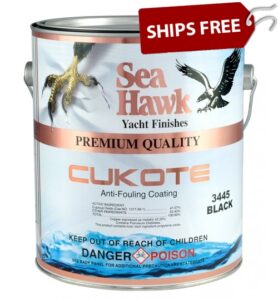
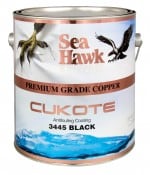
Sea Hawk Cukote bottom paint is an ablative, self-polishing antifouling paint that uses an enhanced, copolymer, biocide release mechanism.
Visibility: The color of the bottom paint can also affect the visibility of the boat in the water. Lighter colors may make the boat more visible, which can be important for safety, especially in crowded or high-traffic areas.
Aesthetics: Of course, the color of the bottom paint also affects the overall appearance of the boat. Many boat owners choose colors that complement their boat’s hull color or that they find visually appealing.
The color of bottom paint can have both practical and aesthetic implications for boat owners. It’s important to consider factors such as temperature regulation, growth prevention, visibility, and personal preference when selecting bottom paint colors.