
Last Updated: February 3, 2026
Quick Recommendation
Boat Gelcoat Paint: When to Use It
- Use gelcoat when repairing or restoring fiberglass surfaces and you want a thick, durable, original-style finish that can be sanded and polished.
- Use marine paint instead for large cosmetic refinishing jobs where ease of application and faster turnaround matter more than thickness.
- Below the waterline: Gelcoat is not antifouling—boats kept in the water still require proper bottom paint.
- Bottom line: Gelcoat excels at repairs and long-term durability; marine paint excels at simplicity and full-boat color changes.
Tip: Gelcoat requires correct catalyst ratios and air-inhibition control (wax additive or PVA) to cure properly.
How Can You Tell if a Boat Has Gelcoat or Paint?
You can usually tell whether a boat has gelcoat or paint by inspecting the surface, checking for peeling, looking at scratches, testing a small hidden area, and reviewing the boat’s history. Gelcoat is the original molded finish on most fiberglass boats and is usually thicker, harder, and more polishable. Paint is a coating applied over the surface and may show peeling, brush marks, roller texture, or a visible edge where it was applied.
If the boat is fiberglass and has never been refinished, the surface is most likely gelcoat. If the finish has been changed, repainted, or repaired, it may have marine paint over the original gelcoat. Knowing the difference matters because gelcoat can often be compounded, polished, or repaired, while painted surfaces usually require a different repair and recoating process.
Gelcoat vs Paint Identification Guide
| What to Check | Likely Gelcoat | Likely Paint |
|---|---|---|
| Boat material | Common on fiberglass boats as the original outer finish | May be applied over fiberglass, wood, aluminum, steel, or old gelcoat |
| Surface thickness | Usually thicker than paint and can often be sanded and polished | Usually a thinner coating layer over the original surface |
| Peeling or flaking | Gelcoat may crack or oxidize but does not usually peel like paint | Paint may peel, chip, lift, or flake when adhesion fails |
| Scratches | Scratches may show the same color underneath if the gelcoat is thick | Scratches may reveal a different color or original gelcoat underneath |
| Oxidation | Often turns chalky, dull, or faded and may improve with compounding | May fade, chalk, or lose gloss, but aggressive compounding can damage thin paint |
| Edges and seams | No obvious coating edge if it is original molded gelcoat | May show paint edges around hardware, tape lines, repairs, or masked areas |
| Brush or roller marks | Usually not visible on original molded gelcoat | May show brush marks, roller stipple, spray texture, or uneven coating thickness |
| Repair method | Often repaired with gelcoat paste, matching gelcoat, sanding, and polishing | Usually repaired by sanding, priming, and repainting with a compatible marine paint |
Simple Ways to Check if Your Boat Has Gelcoat or Paint
| Test | What to Do | What It May Tell You |
|---|---|---|
| Look for peeling | Inspect corners, chips, scratches, hardware edges, and damaged areas. | Peeling or lifting usually points to paint rather than original gelcoat. |
| Check a scratch | Look closely at a scratch or chip to see whether another color appears underneath. | A different color below the surface may mean the boat was painted. |
| Inspect around hardware | Look near cleats, rails, fittings, rub rails, hinges, and masked edges. | Paint may leave visible edges, tape lines, or build-up around hardware. |
| Try light compounding in a small area | Compound a small hidden or low-visibility spot carefully. | Oxidized gelcoat often improves noticeably, while thin paint may not tolerate aggressive compounding. |
| Look for brush or roller texture | View the surface from an angle in good light. | Brush marks, roller stipple, or uneven texture may indicate a painted surface. |
| Review the boat’s history | Check records, previous owner information, repair invoices, or manufacturer details. | A repaint, restoration, or color change usually means paint was applied over gelcoat. |
Best Next Step Based on What You Find
| What You Find | Likely Surface | Recommended Next Step |
|---|---|---|
| Dull, chalky fiberglass surface that improves with compounding | Oxidized gelcoat | Clean, compound, polish, and protect before deciding to repaint. |
| Peeling or flaking coating | Paint over gelcoat or another coating | Sand or remove loose paint, then repaint with a compatible marine coating system. |
| Small chips or gouges in fiberglass | Damaged gelcoat | Use gelcoat repair material, then sand, compound, and polish. |
| Scratches reveal a different color underneath | Painted surface | Identify the existing coating before sanding, priming, or repainting. |
| Old finish is faded but not peeling | Could be gelcoat or paint | Test a small area before using aggressive compounds, sandpaper, or solvents. |
| Below-waterline coating is wearing away | Likely bottom paint | Identify whether it is hard or ablative bottom paint before recoating. |
What to Consider Before Repairing or Recoating
Before repairing, polishing, or repainting your boat, confirm whether you are working with gelcoat, topside paint, bottom paint, or another marine coating. The wrong repair method can create adhesion problems, color mismatch, sanding damage, or coating failure.
If the surface is gelcoat, you may be able to restore shine with cleaning, compounding, and polishing before repainting is necessary. If the surface is painted, be more cautious with aggressive sanding or buffing because paint is usually thinner than gelcoat and can be damaged more easily.
Common Questions About Identifying Gelcoat or Paint
Do all fiberglass boats have gelcoat?
Most fiberglass boats are originally built with gelcoat as the outer molded finish. However, a fiberglass boat may later be painted during repair, restoration, refinishing, or color changes.
Can a boat have paint over gelcoat?
Yes, many fiberglass boats have paint applied over the original gelcoat. This is common when the boat has been refinished, repaired, restored, or had its color changed.
How can I tell if my boat was repainted?
Look for peeling, tape lines, brush marks, roller texture, overspray, color differences in scratches, or coating edges around hardware. These signs often indicate that paint was applied over the original surface.
Does gelcoat peel like paint?
Gelcoat usually does not peel like paint. It may oxidize, fade, crack, chip, or become chalky, but peeling or flaking is more commonly associated with paint or another coating applied over the surface.
Can you polish gelcoat?
Yes, oxidized gelcoat can often be restored by cleaning, compounding, polishing, and waxing or sealing. This is one reason it is important to identify gelcoat before deciding to repaint.
Can you polish boat paint?
Some marine paints can be polished lightly, but painted surfaces are usually thinner than gelcoat and can be damaged by aggressive compounding or sanding. Always test a small area and follow the coating manufacturer’s recommendations.
Can you apply gelcoat over paint?
Gelcoat should generally not be applied over standard boat paint unless the manufacturer specifically allows it. Gelcoat is usually applied over fiberglass, existing gelcoat, or compatible repair materials, so paint may need to be removed first.
Can you paint over gelcoat?
Yes, you can paint over gelcoat if the surface is clean, dry, sound, dewaxed, sanded, and properly prepared. Some paint systems may also require primer for best adhesion and durability.
What if I cannot tell whether it is gelcoat or paint?
If you are unsure, test a small hidden area, inspect scratches and edges, review the boat’s history, or ask a marine repair professional. It is better to identify the surface before choosing cleaners, compounds, sandpaper, primer, gelcoat, or paint.
Is bottom paint the same as gelcoat?
No. Bottom paint is an antifouling coating used below the waterline to help reduce marine growth. Gelcoat is the original outer finish on many fiberglass boats. A boat can have gelcoat on the hull with bottom paint applied over the underwater portion.
Recommended Gelcoat and Boat Paint Supplies
Bottom Paint Store carries gelcoat repair products, marine topside paints, bottom paints, primers, barrier coats, polishing compounds, sandpaper, cleaners, solvents, waxes, and application supplies. The right product depends on whether your boat has original gelcoat, marine paint, bottom paint, or a coating system applied over the original surface.
Fiberglass is what is used as the base of the boat. These are the strands underneath the gelcoat that you typically do not see. (unless there is a gouge!) Over the fiberglass usually gelcoat is applied at the factory. If the surface is scratched gelcoat is the same color throughout; if the surface has been painted when scratched it will show what is underneath.
Need a repair?
If it is just a gouge and not penetrated all the way through the boat, then you would need to fill in the gouge with 3M premium marine filler (just one product that will work but our most popular for this use). After you have filled in the gouge and sanded it down, you would then apply the topcoat of gelcoat. (gelcoat is the top finish that you see on your entire boat.) Gelcoat is typically much thicker than a paint and is designed to protect the underlying fiberglass as well as provide a smooth shiny appearance. Be sure to leave the marine filler about 1/8″ lower than the surrounding gelcoat. This will allow you to apply enough gelcoat and be able to feather the surrounding area once your done. If you leave the marine filler flush, then once you apply the gelcoat you will have a lump on the area you are repairing (gelcoat should be thick enough or it could release from repair).
Here are the products that you would need.
Gelcoat or Gelcoat repair putty
The amount that you will need is dependent on the size and number of gouges. If you have many gouges, you may consider buying a quart of gelcoat. However, the nice thing about the gelcoat repair kits is that they come with tints so that you can try to match your existing gelcoat color.
If you need to tint a quart our gallon to match see our available gelcoat tints, please note it isn’t recommended to use more than 1 oz of tint per quart or the curing of gelcoat could be effected.
What is gelcoat?
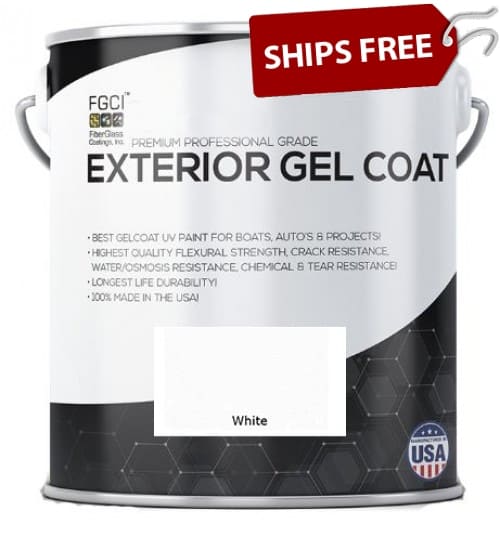
Gelcoat is a type of polymer that is used as a protective coating on boats and other watercraft. It is typically applied to the hull of the vessel, and it acts as a barrier against UV rays, salt water, and other elements. Gelcoat is available in a variety of colors and can be polished to a high shine. It is also one of the most durable materials used in boat construction, making it an ideal choice for those who want their vessel to look good for years to come.
What is difference between gel coat and paint?
Gelcoat is usually much thicker than paint and is engineered to protect the underlying fiberglass as well as provide a smooth shiny appearance. However, the nice thing about the gelcoat repair kits is that they come with tints so that you can try to match your existing gelcoat color. Paint is thinner and typically much easier to apply. Unlike paint, gelcoat will not adhere to existing paint, wood, metal or concrete. Gelcoat also has a limited shelf life of around 3-4 months at around 70 degrees whereas paints that are solvent-based can last up to 15 years while latex and water-based ones may last for up to 10 years.
Final thoughts
So, how do you know if your boat has gelcoat or paint? One method is to use rubbing alcohol on a white cloth and rub it over an inconspicuous area of the hull. If the surface starts to shine, then it’s likely that you have gelcoat. Another option is to take a piece of sandpaper and gently rub it over an area where the finish appears smooth. If the paper doesn’t snag and pull up any fibers from the surface, then it’s most likely gelcoat as well. With this information in hand, now you can properly care for your boat and keep its beautiful finish looking good for years to come! If you need assistance selecting the right gelcoat for your needs, contact technical support at Bottom Paint Store.