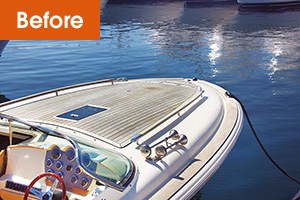
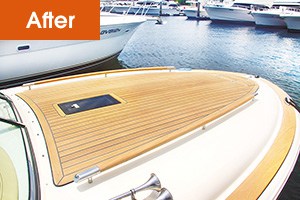
Teak wood holds a revered position in maritime settings due to its exceptional durability and natural beauty. To harness and preserve these valuable qualities, it is imperative to integrate a top-tier teak sealer into your marine maintenance routine.
Teak sealers serve as a robust defense mechanism, protecting against the formidable forces of the marine environment. Without proper protection, teak wood is vulnerable to the detrimental effects of relentless UV rays, corrosive saltwater, and environmental pollutants. However, a high-quality sealer creates an impermeable barrier, ensuring the wood remains resilient over time.
Beyond protection, marine teak sealer can play a pivotal role in retaining the wood’s innate aesthetic appeal. Teak is renowned for its warm, golden-brown hue, and a well-applied sealer acts as a guardian, preserving this natural coloration. Not only does this enhance the overall appearance of boat decks or furniture, but it also contributes to a cohesive and inviting marine atmosphere.
The application and maintenance of a teak sealer are designed to be user-friendly. The sealer penetrates the teak’s surface, creating a durable and enduring shield. With regular and straightforward reapplication, teak surfaces can be kept looking fresh and well-protected.
Moreover, a teak sealer actively contributes to the wood’s longevity by preventing moisture ingress and inhibiting the growth of mold and mildew. By taking this proactive approach, not only do you safeguard your investment, but you also minimize the need for frequent repairs or replacements. Thus, a teak sealer is a wise choice for any boat owner seeking both practicality and enduring elegance on the open waters.
In conclusion, the integration of a high-quality teak sealer into your marine maintenance routine is crucial for preserving the beauty and durability of teak wood. The sealer acts as a powerful defense against the damaging effects of UV rays, saltwater, and environmental pollutants. Furthermore, it retains the wood’s natural coloration, enhances the overall appearance of boat decks and furniture, and creates an inviting marine atmosphere. With user-friendly application and maintenance, teak sealers provide an enduring shield that prevents moisture ingress and the growth of mold and mildew. By investing in a teak sealer, boat owners can protect their teak surfaces, minimize the need for frequent repairs, and enjoy the practicality and timeless elegance that teak wood brings to the open waters.
Choose Teak Oil if you want a natural look that enhances grain and color, and you don’t mind frequent reapplication.
Choose Teak Sealer if you want longer-lasting protection with better resistance to UV damage, mildew, and moisture.
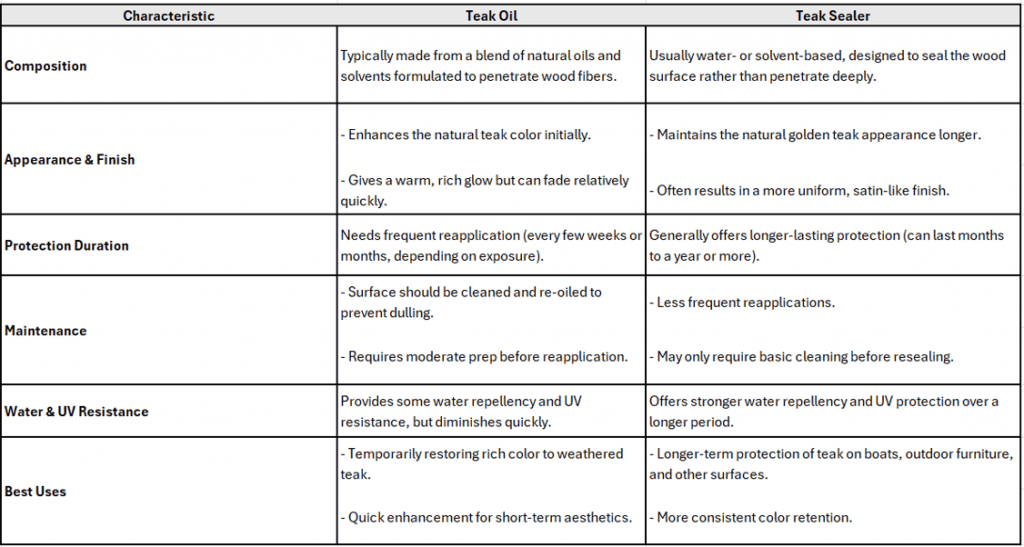
Maintenance difference:Teak oil penetrates and darkens wood; sealers form a protective barrier that lasts longer.
Bottom line:Teak oil offers simplicity and appearance, while teak sealer offers extended protection and reduced maintenance.
Tip: Always clean and fully dry teak before applying either product to ensure proper absorption and performance.
Well-maintained teak woodwork is highly prized and teak wood owners want to do everything they can to keep it looking great. However, the market is saturated with many teak products and it can be confusing to know which will work best for you. This article can be your guide to teak oil and teak sealer.
Quick Answer: Teak Oil vs. Teak Sealer
Teak oil is designed to penetrate teak wood and enhance its natural color, giving it a warm, rich appearance. Teak sealer is designed to protect the surface longer by helping block moisture, dirt, stains, UV exposure, and oxidation. Teak oil usually requires more frequent reapplication, while teak sealer generally provides longer-lasting protection with less maintenance.
For most boat owners, teak sealer is the better choice when the goal is long-term protection and easier maintenance. Teak oil is a good option when you want to quickly restore the natural look of teak and do not mind reapplying it more often.
Some sealers help maintain a natural look without the darker appearance of oil.
Let teak weather to silver-gray
Leave untreated or clean periodically
Teak naturally grays outdoors if left unfinished, though cleaning may still be needed.
Prepare teak for varnish
Neither, unless product instructions allow it
Oil or sealer can interfere with varnish adhesion if not compatible or fully removed.
What to Consider Before Choosing Teak Oil or Teak Sealer
Before choosing between teak oil and teak sealer, consider where the teak is located, how much sun and water it receives, and how often you want to maintain it. Exterior teak on boats is exposed to UV rays, saltwater, rain, foot traffic, and cleaning, so it usually needs more protection than interior teak.
If you like the deep, warm appearance of freshly oiled teak and do not mind frequent upkeep, teak oil can be a good choice. If you want longer-lasting protection and less frequent maintenance, teak sealer is often the more practical option.
Basic Teak Care Steps
Step
What to Do
Why It Matters
1. Clean the teak
Remove dirt, salt, stains, mildew, old oil, and weathered residue.
Oil or sealer bonds and performs better on clean wood.
2. Let the wood dry
Allow teak to dry fully before applying any finish.
Trapped moisture can reduce performance and affect appearance.
3. Lightly sand if needed
Sand rough or raised grain areas according to product instructions.
A smooth, even surface helps create a better-looking finish.
Use thin, even coats and follow the product directions.
Over-application can leave sticky residue or uneven color.
5. Wipe excess material
Remove excess oil or sealer as directed by the manufacturer.
Excess product can attract dirt, stay tacky, or create blotchy areas.
6. Maintain as needed
Reapply when the teak begins to fade, dry out, stain, or lose protection.
Regular maintenance prevents bigger restoration work later.
Common Questions About Teak Oil and Teak Sealer
Is teak oil the same as teak sealer?
No. Teak oil is mainly used to enhance the color and grain of teak, while teak sealer is used to provide longer-lasting surface protection. Oil usually needs to be reapplied more often, while sealer is typically better for reducing maintenance.
Which is better, teak oil or teak sealer?
Teak sealer is usually better if you want longer protection and less frequent maintenance. Teak oil is better if your main goal is to quickly restore a warm, rich teak appearance and you do not mind applying it more often.
Does teak oil protect wood?
Teak oil provides some protection and helps enhance the appearance of the wood, but it usually does not last as long as teak sealer in harsh marine conditions. Exterior boat teak exposed to sun, salt, and water often needs more frequent reapplication when oil is used.
Does teak sealer waterproof teak?
Teak sealer helps reduce moisture absorption and surface staining, but it should not be viewed as making teak completely waterproof forever. Teak still needs cleaning, inspection, and maintenance, especially in marine environments.
Can you put teak sealer over teak oil?
Teak sealer should usually be applied to clean, dry teak, not directly over a fresh or oily surface. Old teak oil may need to be cleaned or removed before sealing so the sealer can bond properly. Always follow the sealer manufacturer’s instructions.
Can you put teak oil over teak sealer?
Teak oil may not penetrate properly over an existing sealer. If the teak has been sealed, the sealer may need to wear away or be removed before oiling. Mixing systems can lead to uneven appearance or poor performance.
How often should teak oil be reapplied?
Teak oil often needs frequent reapplication, especially on exterior boat teak exposed to sun, saltwater, and rain. The exact timing depends on the product, exposure, use, and the look you want to maintain.
How long does teak sealer last?
Teak sealer usually lasts longer than teak oil, but durability depends on sun exposure, saltwater, cleaning, foot traffic, and product quality. Exterior teak should be inspected regularly and resealed when it begins to fade or lose protection.
Should teak be left untreated?
Teak can be left untreated and will naturally weather to a silver-gray color. This is a valid choice for some boat owners, but untreated teak can still collect dirt, stains, mildew, and surface weathering, so periodic cleaning may still be needed.
What is best for teak on a boat?
For most exterior boat teak, teak sealer is often the best balance of appearance, protection, and maintenance. Teak oil works well for a rich, freshly treated look, while varnish may be used when a glossy, coated brightwork finish is desired.
Recommended Teak Care Products and Supplies
Bottom Paint Store carries teak cleaners, teak brighteners, teak oils, teak sealers, marine varnishes, brushes, sandpaper, wiping cloths, and related wood care supplies. The right product depends on whether you want a natural oiled look, longer-lasting sealed protection, a silver-gray weathered finish, or a glossy varnished appearance.
Quick Insight: Teak Oil vs. Teak Sealer
Teak oil is designed to penetrate teak wood and enhance its natural color, giving it a warm, rich appearance. Teak sealer is designed to protect the surface longer by helping block moisture, dirt, stains, UV exposure, and oxidation. Teak oil usually requires more frequent reapplication, while teak sealer generally provides longer-lasting protection with less maintenance.
For most boat owners, teak sealer is the better choice when the goal is long-term protection and easier maintenance. Teak oil is a good option when you want to quickly restore the natural look of teak and do not mind reapplying it more often.
Some sealers help maintain a natural look without the darker appearance of oil.
Let teak weather to silver-gray
Leave untreated or clean periodically
Teak naturally grays outdoors if left unfinished, though cleaning may still be needed.
Prepare teak for varnish
Neither, unless product instructions allow it
Oil or sealer can interfere with varnish adhesion if not compatible or fully removed.
What to Consider Before Choosing Teak Oil or Teak Sealer
Before choosing between teak oil and teak sealer, consider where the teak is located, how much sun and water it receives, and how often you want to maintain it. Exterior teak on boats is exposed to UV rays, saltwater, rain, foot traffic, and cleaning, so it usually needs more protection than interior teak.
If you like the deep, warm appearance of freshly oiled teak and do not mind frequent upkeep, teak oil can be a good choice. If you want longer-lasting protection and less frequent maintenance, teak sealer is often the more practical option.
Basic Teak Care Steps
Step
What to Do
Why It Matters
1. Clean the teak
Remove dirt, salt, stains, mildew, old oil, and weathered residue.
Oil or sealer bonds and performs better on clean wood.
2. Let the wood dry
Allow teak to dry fully before applying any finish.
Trapped moisture can reduce performance and affect appearance.
3. Lightly sand if needed
Sand rough or raised grain areas according to product instructions.
A smooth, even surface helps create a better-looking finish.
Use thin, even coats and follow the product directions.
Over-application can leave sticky residue or uneven color.
5. Wipe excess material
Remove excess oil or sealer as directed by the manufacturer.
Excess product can attract dirt, stay tacky, or create blotchy areas.
6. Maintain as needed
Reapply when the teak begins to fade, dry out, stain, or lose protection.
Regular maintenance prevents bigger restoration work later.
Common Questions About Teak Oil and Teak Sealer
Is teak oil the same as teak sealer?
No. Teak oil is mainly used to enhance the color and grain of teak, while teak sealer is used to provide longer-lasting surface protection. Oil usually needs to be reapplied more often, while sealer is typically better for reducing maintenance.
Which is better, teak oil or teak sealer?
Teak sealer is usually better if you want longer protection and less frequent maintenance. Teak oil is better if your main goal is to quickly restore a warm, rich teak appearance and you do not mind applying it more often.
Does teak oil protect wood?
Teak oil provides some protection and helps enhance the appearance of the wood, but it usually does not last as long as teak sealer in harsh marine conditions. Exterior boat teak exposed to sun, salt, and water often needs more frequent reapplication when oil is used.
Does teak sealer waterproof teak?
Teak sealer helps reduce moisture absorption and surface staining, but it should not be viewed as making teak completely waterproof forever. Teak still needs cleaning, inspection, and maintenance, especially in marine environments.
Can you put teak sealer over teak oil?
Teak sealer should usually be applied to clean, dry teak, not directly over a fresh or oily surface. Old teak oil may need to be cleaned or removed before sealing so the sealer can bond properly. Always follow the sealer manufacturer’s instructions.
Can you put teak oil over teak sealer?
Teak oil may not penetrate properly over an existing sealer. If the teak has been sealed, the sealer may need to wear away or be removed before oiling. Mixing systems can lead to uneven appearance or poor performance.
How often should teak oil be reapplied?
Teak oil often needs frequent reapplication, especially on exterior boat teak exposed to sun, saltwater, and rain. The exact timing depends on the product, exposure, use, and the look you want to maintain.
How long does teak sealer last?
Teak sealer usually lasts longer than teak oil, but durability depends on sun exposure, saltwater, cleaning, foot traffic, and product quality. Exterior teak should be inspected regularly and resealed when it begins to fade or lose protection.
Should teak be left untreated?
Teak can be left untreated and will naturally weather to a silver-gray color. This is a valid choice for some boat owners, but untreated teak can still collect dirt, stains, mildew, and surface weathering, so periodic cleaning may still be needed.
What is best for teak on a boat?
For most exterior boat teak, teak sealer is often the best balance of appearance, protection, and maintenance. Teak oil works well for a rich, freshly treated look, while varnish may be used when a glossy, coated brightwork finish is desired.
Recommended Teak Care Products and Supplies
Bottom Paint Store carries teak cleaners, teak brighteners, teak oils, teak sealers, marine varnishes, brushes, sandpaper, wiping cloths, and related wood care supplies. The right product depends on whether you want a natural oiled look, longer-lasting sealed protection, a silver-gray weathered finish, or a glossy varnished appearance.
What is teak oil?
Marine teak oil has been used on boats and teak wood furniture for many years. Teak oils are usually made of tung oil or linseed oil with extra additives mixed in. The oil “feeds” the wood, in a sense, and accentuates the grain and color. Thus, applying oil to the teak gives it a warm and rich look. Many people choose to oil their teak because they like the beauty that oil can bring back. However, teak oil is very high maintenance. Teak Oil does not protect the wood, but it merely recovers the rich appearance that teak wood can offer. This method requires multiple coats of oil and the beautiful finish does not last long. Sunlight and UV rays carbonize the oils, turning the wood finish dark and gray over time. Gradually, the bright and warm look that you worked so hard to attain is lost once again.
What is teak sealer?
Another method of caring for teak wood is using a teak sealer. Marine teak sealers are different from oils because they do not “feed” the wood more oils or resins. Instead, they seal in the oils and resins that the existing wood contains while at the same time preventing contaminants and moisture from harming it. Sealer does need to be reapplied nearly as often as oil. It is best to keep a nice coating of teak sealer on the wood by reapplying every year.
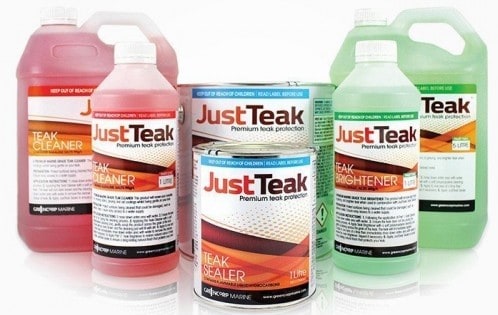
JustTeak™ is a marine-grade teak cleaning system that quickly and easily rejuvenates your teak. It will clean, brighten, and (using a sealer) protect your teak decking and outdoor teak furniture.
Ensures a beautiful, natural finish that protects your teak from sun, rain, and stains. You will also prolong your teak from turning grey. Teak Sealer can be easily removed with JustTeak™ Teak Cleaner and Teak Brightener when it is time to re-apply.