Category Archives: Bottom Paint

Painting an Aluminum Outdrive

Last Updated: January 26, 2026

Quick Recommendation

Best Bottom Paint for an Aluminum Outdrive

  • Use aluminum-safe antifouling only: Choose copper-free or aluminum-compatible bottom paint specifically approved for outdrives.
  • Prime correctly: Apply an etching or epoxy primer designed for aluminum to prevent corrosion and ensure adhesion.
  • Avoid traditional copper paints: Standard copper-based antifouling can cause galvanic corrosion and damage aluminum components.
  • Bottom line: The best paint for an aluminum outdrive is a manufacturer-approved, copper-free system applied over the proper primer.

Tip: Always check the outdrive manufacturer’s recommendations and maintain sacrificial anodes to further protect against corrosion.

Outdrives are difficult to keep free of growth. The main reason for this is that traditional copper-based bottom paints cannot be used on an aluminum outdrive. Doing so will result in serious corrosion from the aluminum reacting to the copper in the paint.

The Safe Solution: Use Copper-Free Paint

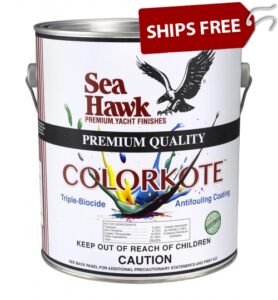
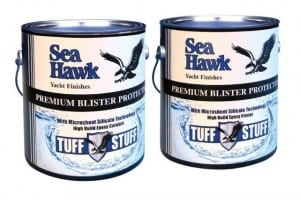
To protect your aluminum outdrive and keep it clean, you’ll need a copper-free antifouling paint specifically formulated for use on aluminum. Several brands offer effective options—Interlux, Blue Water Marine, and Sea Hawk among them—but for best results, we recommend pairing with Tuff Stuff Primer and Colorkote.

Why This Combo Works

  • Tuff Stuff Primer creates a protective barrier that shields the aluminum from moisture and corrosion while ensuring excellent paint adhesion.

  • Colorkote Outdrive Paint delivers strong antifouling performance without copper, making it safe for use on aluminum components below the waterline.

Application Tips

  1. Surface Prep: Start by cleaning the outdrive thoroughly and removing any old paint or marine growth. Sand the surface lightly to create a rough texture for the primer to bond.

  2. Prime: Apply Tuff Stuff Primer using a roller or brush. Follow the manufacturer’s recommended drying times.

  3. Paint: Once the primer is cured, apply Colorkote with a brush or roller. Two coats are typically recommended for optimal protection.

Colorkote

The Outdrive Paint shows best results when paired with a primer such as Tuff Stuff. These products are usually applied by brush and roller.

An alternative to painting is a foul release system, such as PropGlide. For more information on Propglide, see this How To Article. 

What’s The Difference Between Freshwater and Saltwater Bottom Paint?

Last Updated: January 13, 2026

Quick Recommendation

Freshwater vs Saltwater Bottom Paint: What’s the Difference?

  • Choose Freshwater Bottom Paint if your boat stays exclusively in lakes or rivers and you need protection primarily against slime and algae, not heavy barnacle growth.
  • Choose Saltwater Bottom Paint if your boat is kept in coastal or tidal waters where barnacles, shell growth, and aggressive fouling are common.
  • Bottom line: Saltwater paints use stronger biocides for harsher conditions, while freshwater paints are formulated for lighter fouling environments.

Tip: Using freshwater paint in saltwater can lead to rapid fouling, while saltwater paint may be unnecessary—and sometimes restricted—in freshwater environments.

Typically there is less growth in fresh water than in salt water. For that reason, bottom paint used in fresh water usually have less active ingredients (copper, zinc, etc.) to prevent growth. Most bottom paint for salt water can be used in fresh water. However, there are some exception, such as, Interlux Micron 66. This paint is limited to salt water only. Using Micron 66 bottom paint in fresh water, or where there is a lot of fresh water run off, will result in failure of the coating.

Consider using a bottom paint that is good in both fresh water and salt water. All of Sea Hawk Paints  , Blue Water, Pettit or Interlux bottom paints are good for either types of waters and are considered both fresh water bottom paint and salt water bottom paint. You never know where you might travel that will have significant fresh water run off!

Keep in mind that you probably don’t need the top performing paint like Sea Hawk Biocop TF bottom paint if you are in fresh water. You can go with a less expensive alternative like Copper Shield 25, AF-33 or Talon. Anything more is probably over kill!


Preparing Your Boat for a Bottom Paint Job

Last updated January 14, 2026


Preparation is key when painting on any surface. Applying bottom paint is not the cleanest of jobs, but it is really simple to do. Below you will find the exact steps to insure a good bottom paint job, whether you have a new boat, or a boat that has existing bottom paint on it.

Preparation for Bare Fiberglass
When painting a bare fiberglass gel coat hull for the first time, it is extremely important that all contaminants such as grease, oil, wax, salt, or other foreign material are completed removed prior to sanding or application of a Sea Hawk System. Scrub the surface with a detergent soap and stiff bristle brush.

Clean your boat following options A or B

A. Clean and de-wax fiberglass hull withS-80 Wax N’ Grease Killer solvent based dewax. Saturate cheeseclothrag and wipe thoroughly to remove any cleaner and contaminants. Be sure to remove any residue before it dries and change rags frequently to insure contaminants are completely removed.

B. Apply S-90 De-Wax Etch & Cleaner with a maroon 3M Scotch-Brite® pad scrubbing thoroughly. Do not allow cleaner to dry on the surface and remove by flushing with water.Rinse entire surface with water and check for any beadingon the surface which will indicate that wax is still present. If necessary repeat step 2 again until the surface is contaminant-free. Choose your system below.

Sand & Clean

Sand to a uniformly frosty, dull looking surface with 80-100 grit (no finer) sandpaper, rewash with S-80 Wax N’ Grease Killer , S-90 De-Wax Etch & Cleaner .


Apply Bottom Paint
Apply a minimum of two coats of Sea Hawk bottom paint. Allow 3 to 6 hours between coats and a minimum overnight dry before launching. See the specific Technical Data Sheet for the bottom paint you are using. Some bottom paint may require more than 2 coats.

Tip: Epoxy systems on the bottom of bare fiberglass is the best way to protect your boat against blisters. It also provides added adhesion of the bottom paint to the hull. 

Preparation Over Existing Bottom Paint

Clean the boat
Clean the existing boat bottom paint with a pressure washing. If you have excess build up of growth, you can remove this by scraping and/or using muratic acid. Try to get all growth residue off the existing old bottom paint so that you have good adhesion of the new bottom paint.

Scuff Sand the surface
Scuff sand to a dull looking surface with 80-100 grit (no finer) sandpaper, then rinse with water and allow to dry. If your old bottom paint is really chalky, consider giving it a more agressive sanding to insure proper adhesion of the new bottom paint.

Apply Bottom Paint
Apply minimum of two coats of Sea Hawk bottom paint. Allow 3 to 6 hours between coats and a minimum overnight dry before launching. See the specific Technical Data Sheet for bottom paint being used. Some bottom paint may require more than 2 coats.

Sea Hawk Ablative Bottom Paint Rankings by Antifouling Performance

Sea Hawk Ablative Bottom Paint Rankings by Antifouling Performance

sea hawk paints

Rank Bottom Paint Name Fresh Water / Salt Water High Growth Area Performance Slime Fighting Warm Water Performance Cost Comments
1 Islands 77 Plus   Both ***** ***** ***** $$$$$ Top Performance for Highest Growth Areas (Non-US)
1 Biocop TF Both ***** ***** ***** $$$$$ Top Performance for Highest Growth Areas (US)
2 Cukote Biocide Plus Both **** *** **** $$$$ Best Value Multi-Seasonal with Slime Fighter
3 Cukote Both *** n/a *** $$$ Best Overall Value Multi-Seasonal
4 Monterey Both *** n/a *** $$ Best Value Water-Based Multi-Seasonal
5 AF-33 Both *** n/a *** $ Lowest Cost Multi-Seasonal Available
6 Smart Solution Salt ** n/a ** $$ Metal Free Best Choice for Aluminum in salt water
7 Mission Bay Fresh ** n/a ** $$$ Best Choice for Aluminum and Pontoons. Safe on Aluminum.
8 Mission Bay CSF Both ** n/a ** $$$ Environmentally friendly water-based and copper free. Best for apply indoors.
9 VMG Racing Finish Fresh * n/a * $ Best used in Fresh Water Only, or as a Smooth Racing Finish

Ranking: By Most Effective Antifouling Performance
* All rankings provided by Bottom Paint Store are based on customer feedback, product testing data, and current market prices.

How to Apply Bottom Paint to an Aluminum Boat

Last Updated: January 9, 2026

Bottom paint is an essential part of protecting your aluminum boat from the elements. Be sure to choose a bottom paint that is specifically designed for aluminum boats. Some bottom paints can actually cause corrosion on aluminum, so it’s important to make sure you get the right type of paint. Apply the bottom paint according to the manufacturer’s instructions. In general, you’ll want to apply two coats for best results.

Here are a few tips on how to apply bottom paint to ensure optimal results.

Quick Recommendation

How to Apply Bottom Paint to an Aluminum Boat

  • Use aluminum-safe bottom paint only—choose copper-free or aluminum-compatible antifouling to prevent galvanic corrosion.
  • Prime correctly: Apply an etching or epoxy primer designed for aluminum immediately after surface prep to ensure adhesion.
  • Follow a strict prep process: Degrease, lightly sand, and avoid touching bare aluminum before priming.
  • Bottom line: Aluminum boats require specific primers and copper-free paints; skipping these steps can cause paint failure and corrosion.

Tip: Never apply traditional copper-based bottom paint directly to aluminum—doing so can rapidly damage the hull.

Tuff Stuff Marine Epoxy Primer


Tuff Stuff Marine Epoxy Primer

Tuff Stuff Marine Epoxy Primer

Begin by pressure washing your boat, and scrubbing any debris, dust, contaminants and marks off the boat surface so it is totally clean. Give your boat a final rinse and dry. If you do not have any coatings at all on the bottom of the boat, we suggest to sand the hull with 80 grit and then apply Tuff Stuff High Build Epoxy. It is a water tight barrier coat designed for use under the waterline and with aluminum hulls. Use 2 coats. You can apply the 2nd coat within a couple of hours of the first coat. (up to 6 days)

After you apply Tuff Stuff marine epoxy primer on hull, be sure to use an aluminum safe bottom paint. The bottom paint needs to be applied the same day as the Tuff Stuff marine epoxy primer. Bottom paints in general are designed to repel hard growth. Colorkote is an excellent triple biocide bottom paint for aluminum hulls when in salt water. We recommend Mission Bay for fresh water.  I have listed links below to the products described above. These can be brushed, sprayed, or rolled.  If you already have coating(s) on the hull, pressure wash, sand with 80 grit, and then apply your paint choice.

Links:

How to Video: Aluminum Boat Bottom Paint Application

See here for all aluminum safe bottom paints.


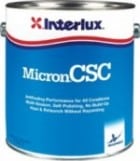
Micron CSC by Interlux Vs. Cukote by Sea Hawk

Last Updated: February 2, 2026

Quick Recommendation

Micron CSC vs Cukote: Which Bottom Paint Is Right for You?

  • Choose Micron CSC (by :contentReference[oaicite:0]{index=0}) if you want a self-polishing, multi-season ablative with proven performance in moderate to heavy fouling and predictable wear that helps reduce paint buildup.
  • Choose Cukote (by :contentReference[oaicite:1]{index=1}) if you need a hard, scrub-resistant bottom paint that tolerates frequent cleanings and suits boats that stay in the water year-round.
  • Maintenance difference: Micron CSC wears away gradually; Cukote remains hard and requires periodic sanding to manage buildup.
  • Bottom line: Pick Micron CSC for multi-season ablative convenience; pick Cukote for durability and aggressive cleaning.

Tip: Match your choice to how often your hull is cleaned and how long the boat stays in the water—ablative for lower maintenance, hard paint for frequent scrubbing.

Cukote Bottom Paint Has Clear Advantages over Micron CSC Bottom Paint!

  • CUKOTE 2013Micron CSCHarder Ablative Provides Longer Lasting Performance compare to Interlux Micron CSC!
  • Harder Ablative Provides More Durable Coating for Trailerable Boats
  • Made in the USA with USA Premium Raw Materials VS. European Made and Owned
  • More Copper (Sea Hawk Cukote has over 47% Vs. 37% for Micron CSC)
  • Proven Premium Performance in All Waters!
  • Compatible with Micron CSC (You can apply Cukote over the top of Micron CSC without any additional steps!)
  • One-Year Written Guarantee Against Barnacles

Apply Directly over Micron CSC or any other Bottom Paint and Receive…

                1 Year Written Guarantee Against Barnacle Growth!

Trilux 33 by Interlux Vs. Mission Bay by Sea Hawk

Last Updated: February 2, 2026

Quick Recommendation

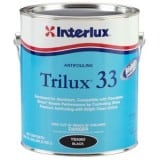
Trilux 33 vs Mission Bay: Which Bottom Paint Should You Choose?

  • Choose Trilux 33 if you need a copper-free antifouling that’s safe for aluminum outdrives, saildrives, and underwater metals with reliable protection in light to moderate fouling.
  • Choose Mission Bay by Sea Hawk if you want a water-based, copper-free ablative that’s easy to apply and clean up, especially for DIY use in freshwater or light saltwater.
  • Application difference: Trilux 33 is a harder, metal-safe coating; Mission Bay is a softer ablative that wears away gradually.
  • Bottom line: Pick Trilux 33 for metal compatibility and durability; pick Mission Bay for ease of use and lighter fouling conditions.

Tip: Always confirm compatibility with your substrate (especially aluminum) and your typical fouling severity before choosing a copper-free paint.

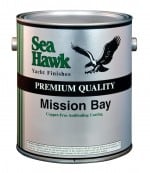
Mission Bay Bottom Paint Has Clear Advantages over Trilux 33!

  • sea hawk mission bayinterlux trilux 3330% Longer Lasting Performance than Interlux Trilux 33 !
  • US Made with Premium Raw Materials VS. European
  • Completely Safe for Aluminum Boats, Including Pontoon Boats!
  • No Copper (Trilux 33 has liquid copper)
  • Proven Premium Performance in All Waters!
  • Solvent Free Version Available (Mission Bay CSF -Easy application, Less Toxic Fumes and VOC’s)
  • Compatible with Trilux 33 (You can apply Sea Hawk Mission Bay over the top of Trilux 33 without any additional steps!)

This  Sea Hawk Mission Bay and Interlux Trilux  33 bottom paint review / comparison was based on customer feedback and information received by the manufacturer(s) either directly or indirectly, and is solely the opinion of Bottom Paint Store.


Aquagard Vs. Monterey by Sea Hawk

Last Updated: February 2, 2026

Quick Recommendation

Aquaguard vs Monterey by Sea Hawk: Which Bottom Paint Is Right for You?

  • Choose Aquaguard if you want a water-based, low-odor ablative that’s easy to apply and clean up—ideal for DIY projects and freshwater or light fouling conditions.
  • Choose Monterey by Sea Hawk if your boat is kept in moderate to heavy fouling saltwater and you need a stronger solvent-based ablative with more aggressive protection.
  • Application difference: Aquaguard emphasizes ease and convenience, while Monterey focuses on durability and fouling resistance.
  • Bottom line: Aquaguard is best for lighter conditions and DIY ease; Monterey is better when performance in tougher waters matters most.

Tip: Match the paint to your water type and haul-out schedule—lighter fouling favors Aquaguard, heavier fouling favors Monterey.

Monterey Bottom Paint Rated for 24+ Months over Aquagard Bottom Paint!

  • Monterey Bottom PaintLonger Lasting Performance than Aquagard! Monterey is a Multi-Season Bottom Paint!
  • Made in the USA with USA Premium Grade Raw Materials
  • Lower VOC Means More Friendly Application!
  • More Copper (Monterey has over TWICE AS MUCH COPPER as Aquagard (55% Vs. 26% for Aquaguard)
  • Proven Premium Performance in All Waters!
  • Compatible with Aquaguard (You can apply Monterey over the top of Aquagard without any additional steps!)
  • Rated by Practical Sailor for 24+ Month Bottom Paint Protection
  • Sea Hawk Paints Monterey Has a One-Year Written Guarantee Against Barnacles!

Apply Directly over Aquaguard or any other Bottom Paint and Receive…

                1 Year Written Guarantee Against Barnacle Growth!

Pettit Hydrocoat Vs. Monterey by Sea Hawk

Last Updated: February 2, 2026

Quick Recommendation

Pettit Hydrocoat vs Monterey by Sea Hawk: Which Should You Choose?

  • Choose Pettit Hydrocoat if you want a water-based, low-odor ablative that’s easy to apply and clean up, especially for DIY projects and freshwater or light saltwater use.
  • Choose Monterey by Sea Hawk if you need a stronger solvent-based ablative with better performance in moderate to heavier fouling conditions.
  • Application difference: Hydrocoat is more user-friendly and dries fast, while Monterey offers more aggressive antifouling protection.
  • Bottom line: Hydrocoat prioritizes ease and convenience; Monterey prioritizes durability and fouling resistance.

Tip: Match your choice to your water conditions and haul-out schedule—lighter fouling favors Hydrocoat, heavier fouling favors Monterey.

Monterey Bottom Paint Has Clear Advantages over Hydrocoat and Bottom Paint!

  • Monterey Bottom PaintLonger Lasting Performance than Pettit Hydrocoat Monterey is a Multi-Season Bottom Paint!
  • Made in the USA with USA Premium Raw Materials VS. European Made and Owned Company
  • Lower VOC Means More Friendly Application!
  • More Copper (Monterey has over 55% Vs. 40% for Hydrocoat)
  • Proven Premium Performance in All Waters!
  • Compatible with Hydrocoat (You can apply Monterey over the top of Hydrocoat without any additional steps!)
  • Rated by Practical Sailor for 24+ Month Bottom Paint Protection
  • One-Year Written Guarantee Against Barnacles!

Apply Directly over Hydrocoat or any other Bottom Paint and Receive…

                1 Year Written Guarantee Against Barnacle Growth!

Provided by Sea Hawk Paints

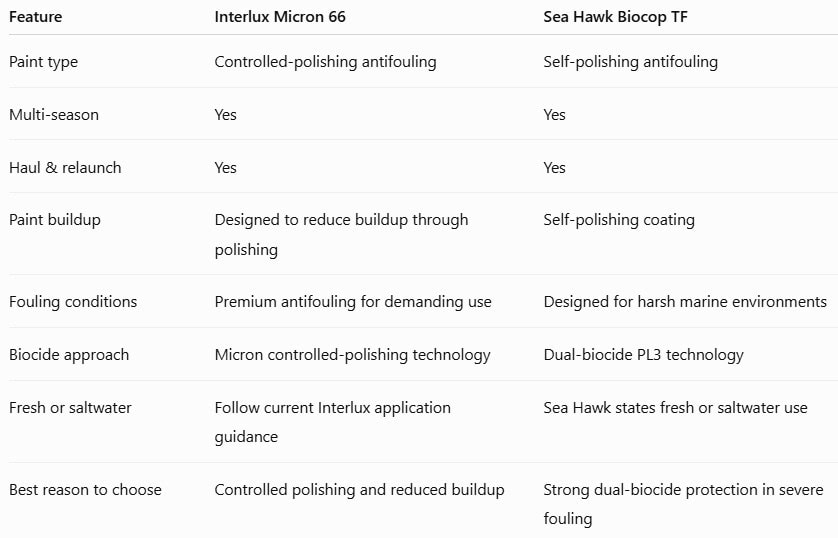
Micron 66 by Interlux VS. Biocop TF by Sea Hawk

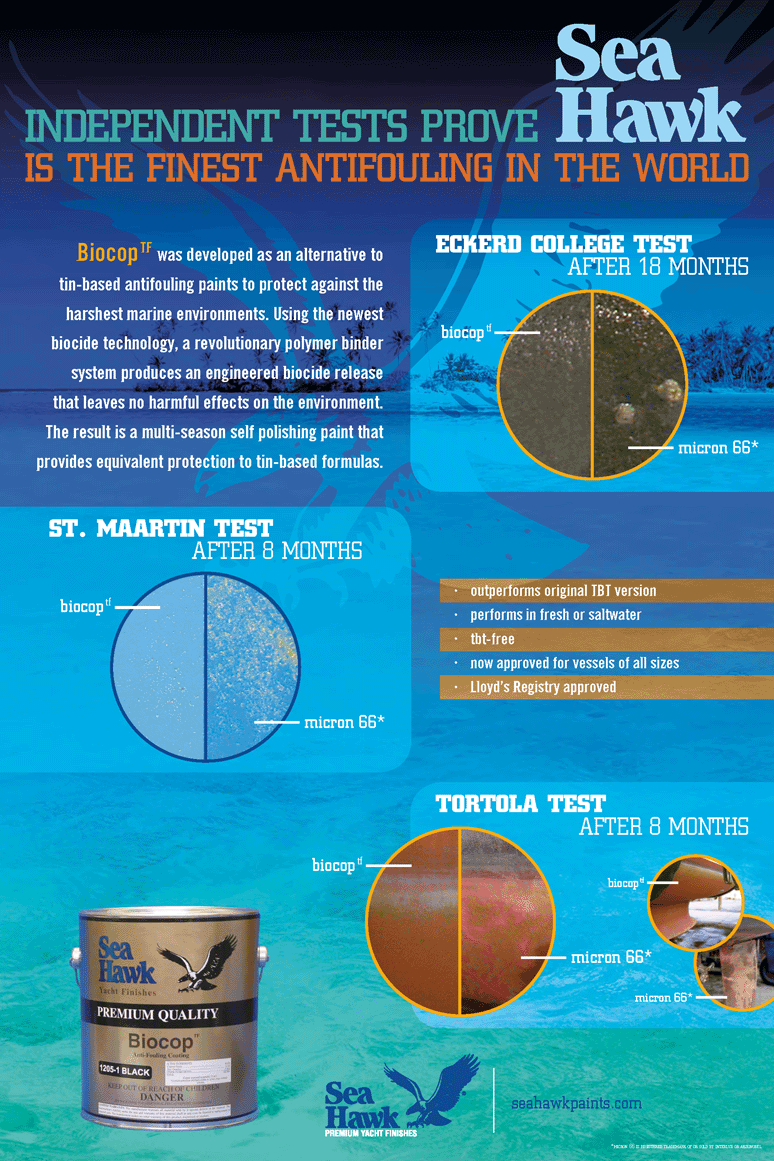
Biocop TF Bottom Paint Outperforms in Micron 66 Bottom Paint in Independent Testing!

Last Updated: January 12, 2026

Quick Recommendation

Micron 66 vs Biocop TF: Which Bottom Paint Is Right for You?

  • Choose Micron 66  if you want a long-lasting, multi-season ablative that performs especially well in heavy fouling saltwater and you don’t mind a higher upfront cost for extended durability.
  • Choose Biocop TF if you prefer a strong single-season or multi-season ablative with excellent slime resistance and a more budget-friendly option for warm coastal waters.
  • Bottom line: Micron 66 is ideal for boaters seeking maximum longevity and premium protection, while Biocop TF offers excellent antifouling performance at a lower price point.

Tip: Both paints are ablative—confirm compatibility with your existing bottom paint and consider your fouling severity and haul-out schedule before choosing.
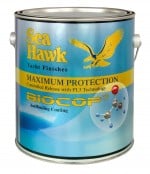
  • Biocop TFInterlux Micron 6630% Better Performance in Longevity and Reduced Growth!
  • US Made with Premium Copper, Solvents, and Rosins!
  • Bottom Paint That Works in Fresh Water!
  • Safer to Apply and Less Odor During Application!
  • More Color Choices!

Practical Sailor rates Biocop TF as a 24 Month paint and a “Top Choice”

2011 October Issues of Power & Motoryacht Magazine rates Biocop TF Excellent!

Apply Directly over Micron 66 or any other Bottom Paint and Receive…

                1 Year Written Guarantee Against Barnacle Growth!

     Once Limited to Mega Yachts (82FT and above), Biocop TF is Legal for all Size Boats!
Provided by Sea Hawk Paints